









AI search tools and LLMs don’t read your store the way humans do. They parse structured data fields, validate them against schema.org specifications, and decide whether your content is trustworthy enough to recommend.
Google’s own documentation confirms that technical SEO foundations - including structured data - apply directly to AI features.
5 Key Takeaways
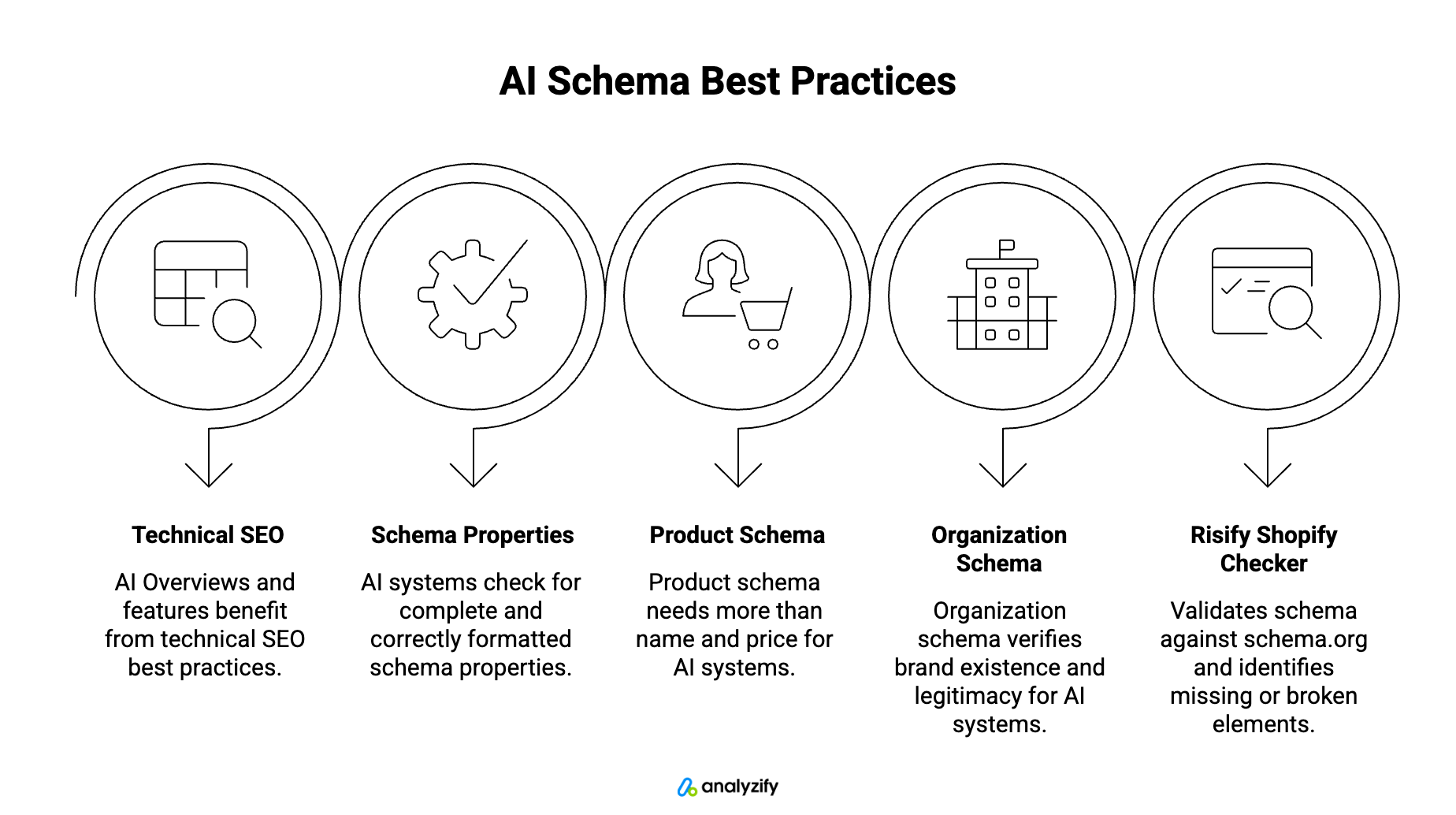
Google confirms that the same technical SEO best practices that work for search also apply to AI Overviews and AI features.
AI systems check specific schema properties - not just whether schema exists, but whether it’s complete and correctly formatted.
Product schema requires more than name and price; AI systems look for brand, availability enumeration, GTIN, aggregateRating, and review markup.
Organization schema is how AI systems verify your brand exists and is legitimate.
Risify Shopify Schema Checker validates your schema against schema.org specifications and shows exactly what’s missing or broken.
Google Confirms Technical SEO Applies to AI Features
Google’s Search Central documentation on AI features states that you can “apply the same foundational SEO best practices for AI features as you do for Google Search overall.”
This includes technical requirements, search policies, and content quality standards.Structured data falls squarely into “technical requirements.”
The same Product schema that gets you rich results in traditional search also determines whether AI Overviews can confidently include your products.
The same Organization schema that establishes your brand in knowledge panels helps AI systems verify who you are.This is a significant confirmation.
It means the structured data work you do for SEO directly transfers to AI visibility - you’re not optimizing for two separate systems.
The Specific Schema Properties AI Systems Parse
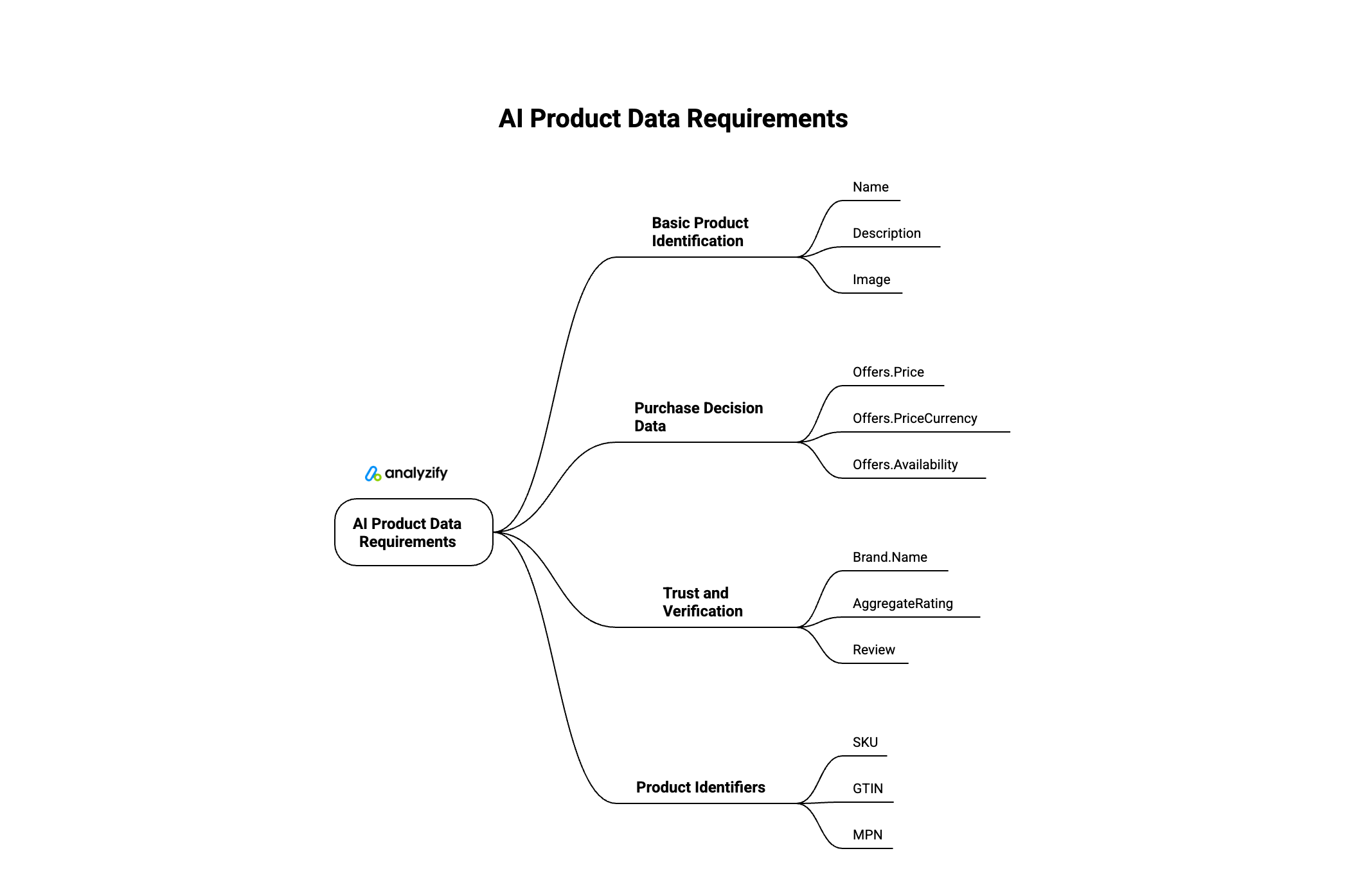
AI systems don’t just check whether a page has Product schema. They validate specific properties and use them to make recommendation decisions. Google’s product structured data documentation lists what these properties are and how they should be formatted. Here’s what each property does for AI visibility:
Basic product identification:
name: The product title AI systems display in recommendations.
description: Used for matching search queries and generating product summaries.
image: Required for visual search features and product carousels.Purchase decision data:
offers.price and offers.priceCurrency: How AI systems answer “best X under $100” queries. Without properly formatted pricing, your products won’t appear in price-filtered recommendations.
offers.availability: Must use schema.org enumeration values (InStock, OutOfStock, PreOrder, BackOrder, Discontinued). Many Shopify themes output “In Stock” or “Available” as plain text - AI systems can’t parse this. When availability can’t be parsed, AI systems either skip the product entirely or show incomplete information.
Trust and verification:* brand.name: How AI systems match your products to brand-related queries. If someone searches “Sony headphones” and your Sony products lack brand schema, AI tools won’t connect them.
aggregateRating and review: Trust signals AI systems use to assess product quality. Products with review schema appear more credible than those without.
sku, gtin, mpn: Product identifiers that help AI systems verify authenticity and match products to specific searches. Particularly important for branded goods.If a property is missing or incorrectly formatted, AI systems may ignore that data point. If enough properties are broken, they may skip the product altogether.
Organization Schema - How AI Verifies Your Brand
Product schema tells AI systems what you sell. Organization schema tells AI systems who you are. Bing’s structured data guidelines recognize Organization as a core schema type that search engines and AI systems use to understand businesses.What Organization schema should include:
name: Your official business name as you want it recognized.
logo: URL to your logo image. AI systems use this for brand verification and visual display.
url: Your primary website URL.
sameAs: An array of your verified social profile URLs (LinkedIn, Instagram, Twitter, Facebook). This is how AI systems connect your store to your social presence and confirm your brand identity across platforms.
contactPoint: Business contact information including phone and email.Without Organization schema, AI systems have no structured way to verify your business is legitimate. They can’t connect your store to your social accounts. They can’t confirm your brand name. This directly affects how AI systems evaluate your trustworthiness when deciding whether to recommend your products.
How to Validate Your Schema with Risify Shopify Schema Checker
Knowing what schema properties matter is one thing. Knowing what’s actually on your pages is another.
Risify Shopify Schema Checker is a free tool that validates and analyzes structured data on any URL. It shows you exactly what AI systems find when they parse your pages.
What it checks:
Detection across formats: Finds all schema.org types on a page - JSON-LD, Microdata, and RDFa.
Visual hierarchy: Shows nested schema structures so you can see how your data is organized.
Validation against specifications: Checks your schema against schema.org requirements. Not just “schema exists” but “schema is correctly formatted.”
Missing property alerts: Highlights required properties that are absent from your markup.
E-commerce priority checks: Focused validation for Product, Organization, BreadcrumbList, FAQPage, and Review/AggregateRating - the schema types that matter most for AI visibility.For Shopify stores, issues found link directly to fixes you can implement in the Risify app, so you’re not left wondering how to solve problems it identifies.
Check Your Shopify Store’s Schema Now
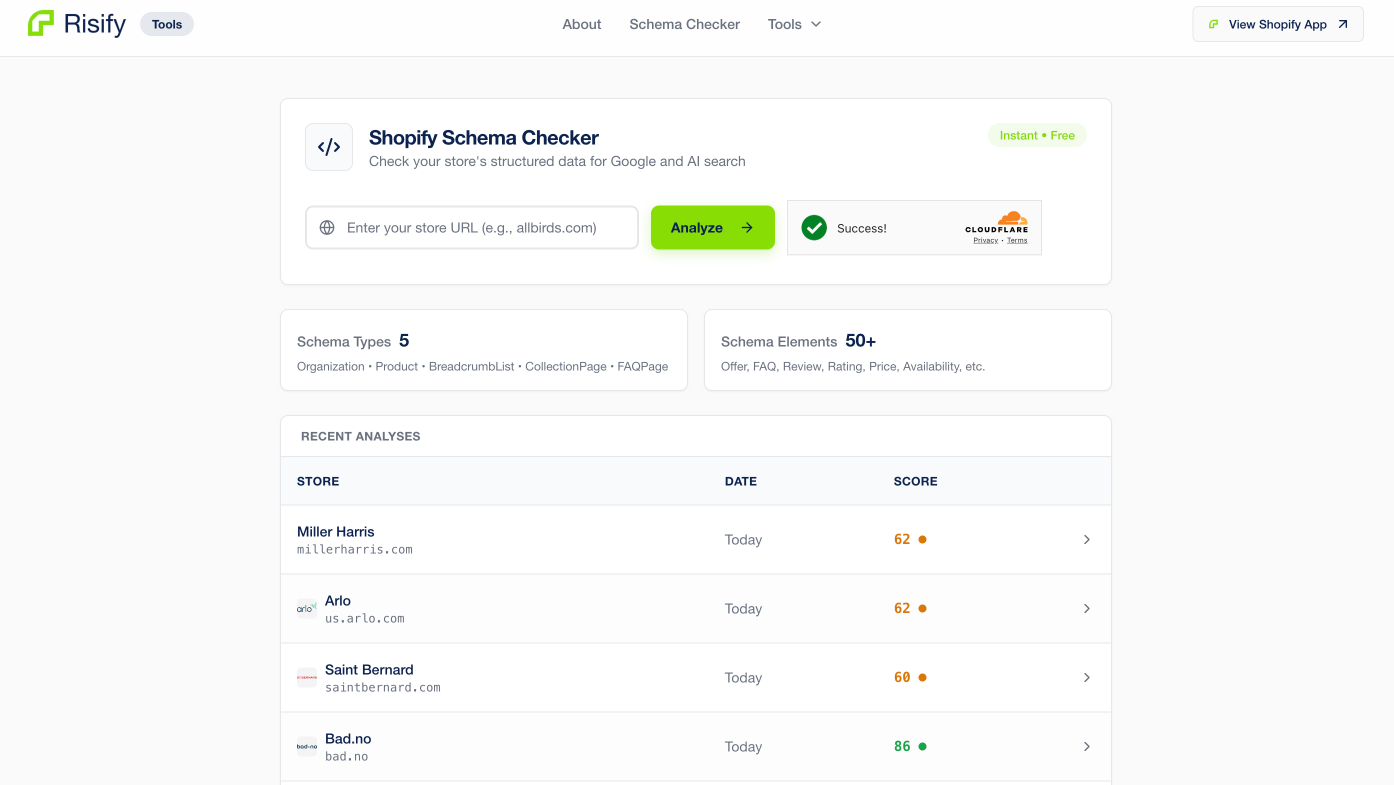
Enter your Shopify store URL at risify.net to see what AI systems actually find when they parse your structured data. If properties are missing or incorrectly formatted, you’ll know exactly what to fix.