










Most Shopify stores get filtered out before AI even reads the content. The page structure is unclear, AI cannot determine what the store sells, and the page gets skipped. Fixing this requires making your store’s structure readable to AI systems.
We also published a video walkthrough on how to make your Shopify store visible in AI search results :
Shopify SEO App Risify Is Live
Why Most Shopify Stores Never Appear in AI Search Results
AI platforms do not crawl the entire internet for every question. They run a small number of targeted searches, pull candidate pages, and immediately filter most of them out.
The filtering happens before content evaluation. AI looks for quick structural signals:
- Page type clarity - Is this obviously a product page, a collection page, or something else?
- Catalog organization - Can AI tell how products relate to collections?
- Store scope - Is it clear what this store actually sells?
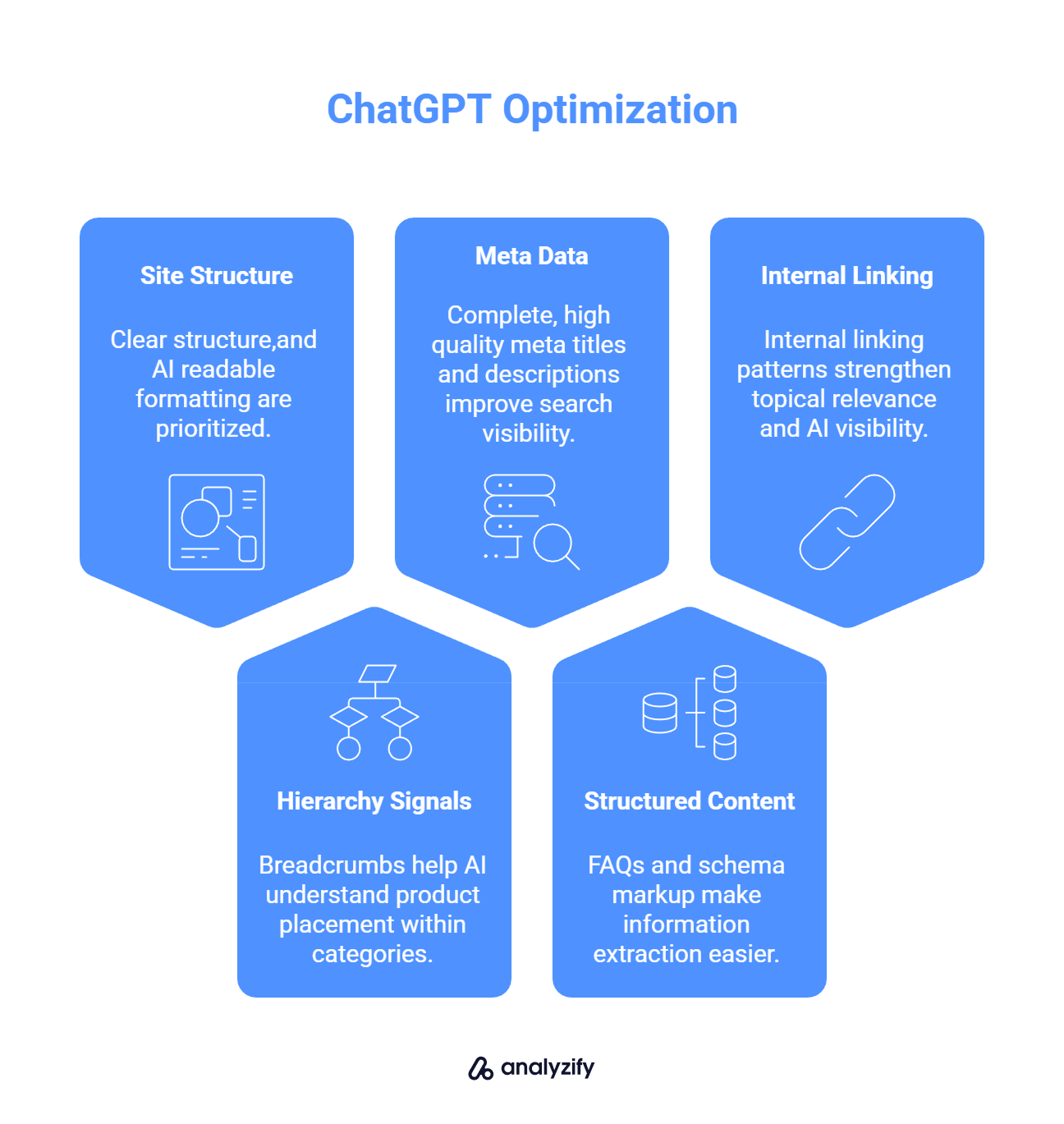 If these signals are weak or missing, the page gets discarded. AI does not guess what an unclear page might be about. It moves to pages where structure is obvious.
The pages that survive share specific traits:
- Page type is immediately identifiable
- Catalog hierarchy is visible on the page
- Relationships between products and categories are explicit
Stores missing these signals are invisible regardless of product quality.
 Improve Your Shopify SEO - Clean Structure, Better Rankings
Struggling to Get Collection Pages Ranked?
Risify improves your internal linking and site structure by adding smart navigation elements to your Shopify store.How to Structure a Shopify Catalog for AI Visibility
AI interprets a store by reading how products and collections connect. Unclear structure means low confidence, which means filtered out.
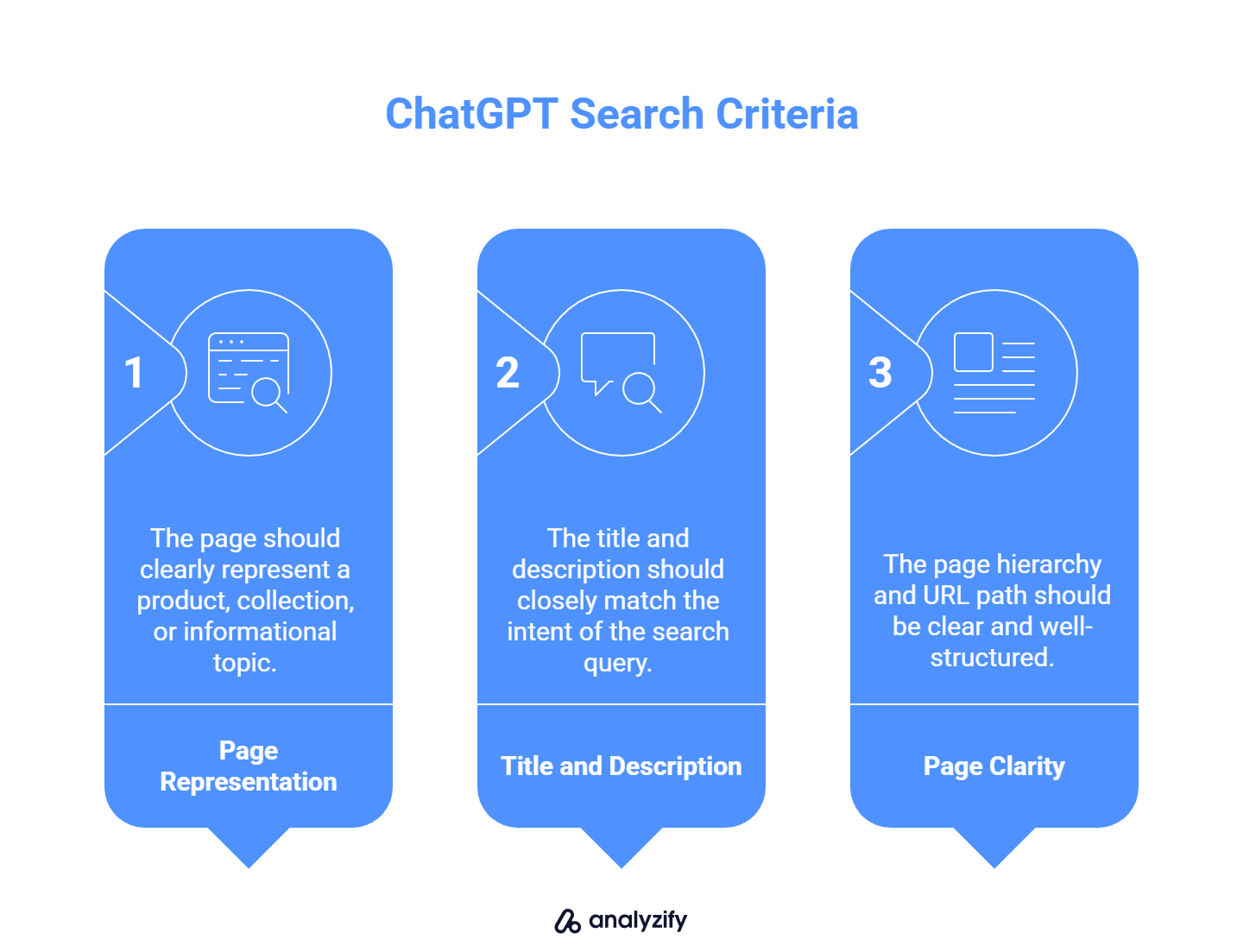
Product-to-collection assignments
Each product should sit in the most specific relevant category. When a product appears in five overlapping collections, AI cannot determine which context is primary.
- Assign products to focused categories with a single clear purpose
- Avoid spreading the same product across multiple broad collections
Collection naming
Names like “Best Sellers” or “New Arrivals” tell AI nothing about what those products are.
- Use names that describe the actual product type: “Waterproof Hiking Boots” vs “Our Picks”
- Keep collection scope focused on one product category
Visible hierarchy
AI needs to see where a product sits in your catalog structure.
- Breadcrumbs show the path: Store > Category > Subcategory > Product
- Collection menus define parent-child relationships between categories
- Related search links connect collections that share buying context
Without these, AI sees isolated pages with no structural context.
Risify manages all of this from one dashboard. Breadcrumbs are implemented store-wide automatically. Collection menus define your category hierarchy. Related search links connect thematically related collections. You control the entire structure centrally instead of configuring each page.
Built for Shopify - No Code Needed - Easy to Manage Missing Navigation on Your Collection Pages?
Risify helps you add visual subcategory links that guide users and improve conversions without editing your theme.What Page-Level Signals Make Shopify Products AI-Readable
Once catalog structure is clear, individual pages need specific signals AI can read and extract.
Meta titles and descriptions
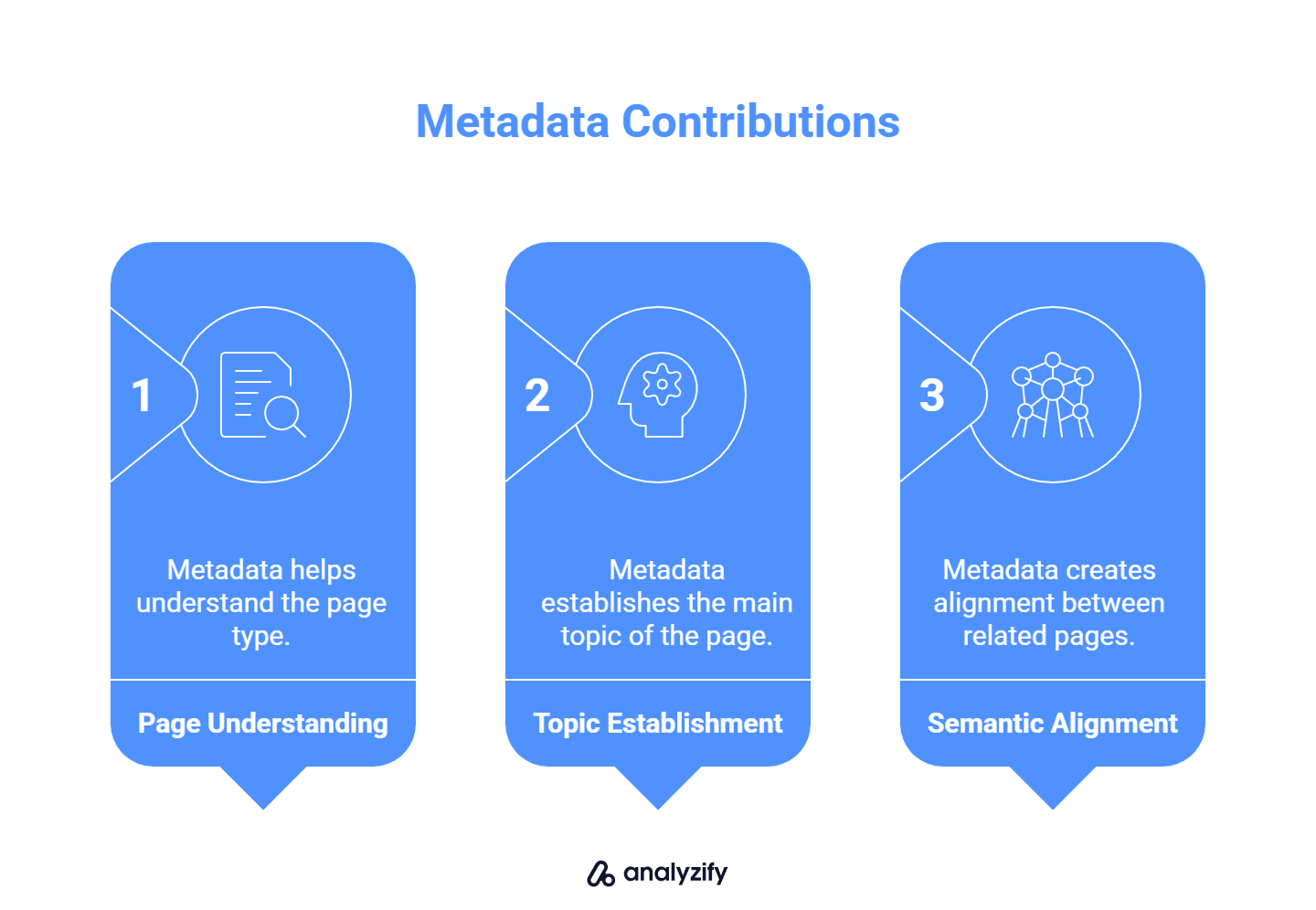
These are the first text AI encounters on any page.
- Meta title should state exactly what the product is, primary subject early
- Meta description should surface key attributes first: material, use case, specifications
- Inconsistent or missing metadata weakens AI confidence in the page
Shopify requires editing meta text one product at a time. Across hundreds of products, this creates inconsistent patterns and gaps. Risify’s AI Meta Writer generates optimized meta titles and descriptions in bulk - select products, generate, review, publish.
FAQs with schema markup
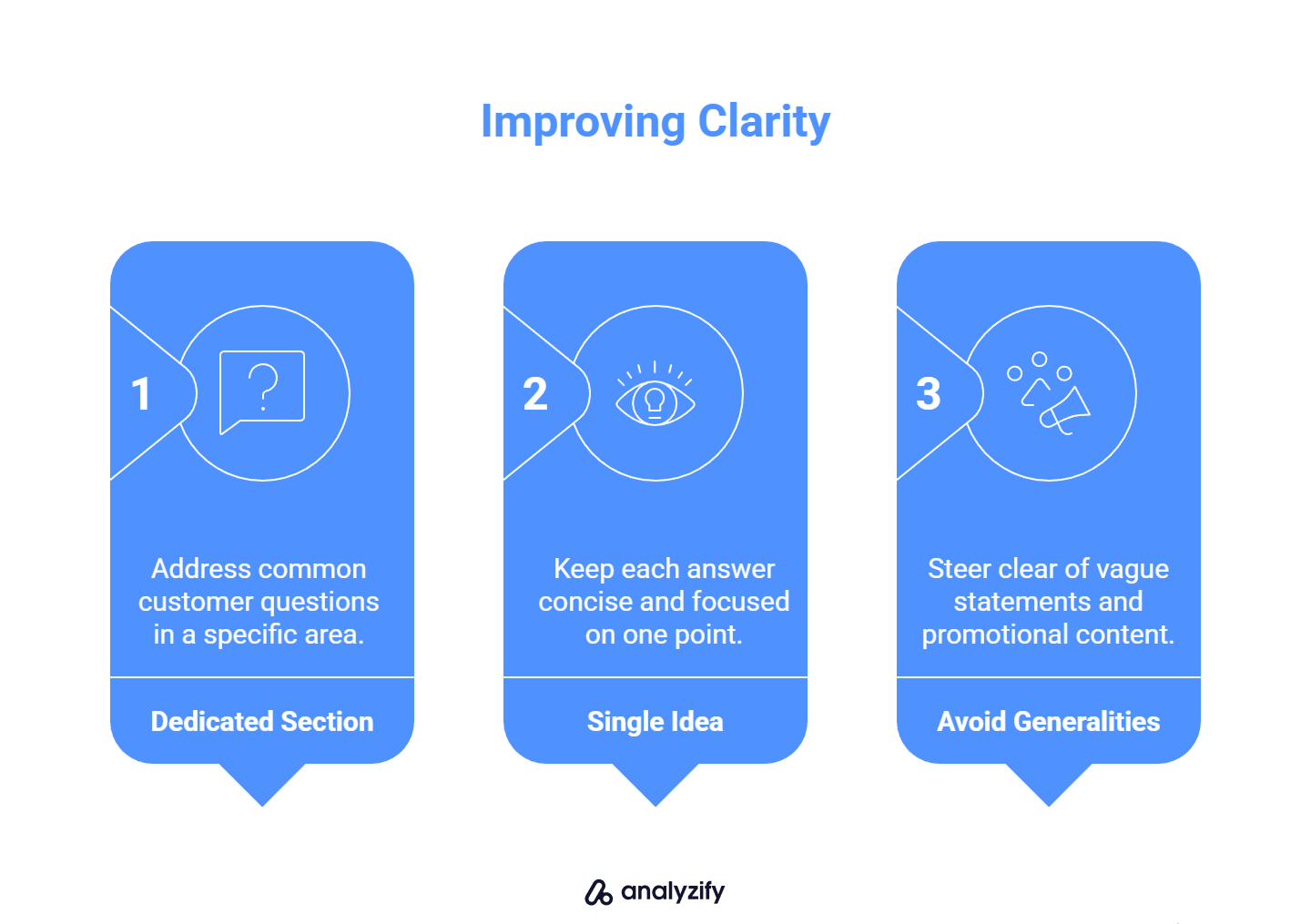
AI systems interpret structured Q&A formats very well. They separate questions from answers clearly and reduce guessing.
- Address high-frequency customer questions directly on the page
- Keep each answer focused on a single point
- Avoid generic statements that do not answer anything specific
Managing FAQs manually across a full catalog is slow and leads to inconsistency. Risify’s AI FAQ Writer generates FAQs in bulk with proper FAQPage schema automatically included. The schema tells AI exactly what content type it is reading, which improves extraction accuracy.
Schema markup for page type
Schema tells AI explicitly what a page represents - product, collection, FAQ, brand page.
Built for Shopify Stores – Improve SEO and Conversion Together Structure Your Store for Better Rankings and Higher Sales
Risify adds smart navigation, redirects, related search, and product filters – all without code.- Removes ambiguity about page type
- AI relies on explicit signals instead of guessing
- Risify implements schema consistently across products, collections, brands, and FAQs without manual configuration
Start Building AI Visibility for Your Shopify Store
You can install Risify from the Shopify App Store and start managing structure, navigation, metadata, and schema from one place.
If you want to see how this works for your specific store first, book a short demo call with our team.