










Large language models like ChatGPT are becoming discovery engines that influence how shoppers find brands, compare products, and evaluate options. When users ask for recommendations, ChatGPT searches the web, filters pages aggressively, and selects only a handful of sources to read in full.
Stores that are structured clearly, AI readable, and rich in meaningful signals are far more likely to appear in these answers. Improving your store’s hierarchy, metadata, schema, and content quality directly increases your chances of being included in ChatGPT’s shortlist.
Key Takeaways
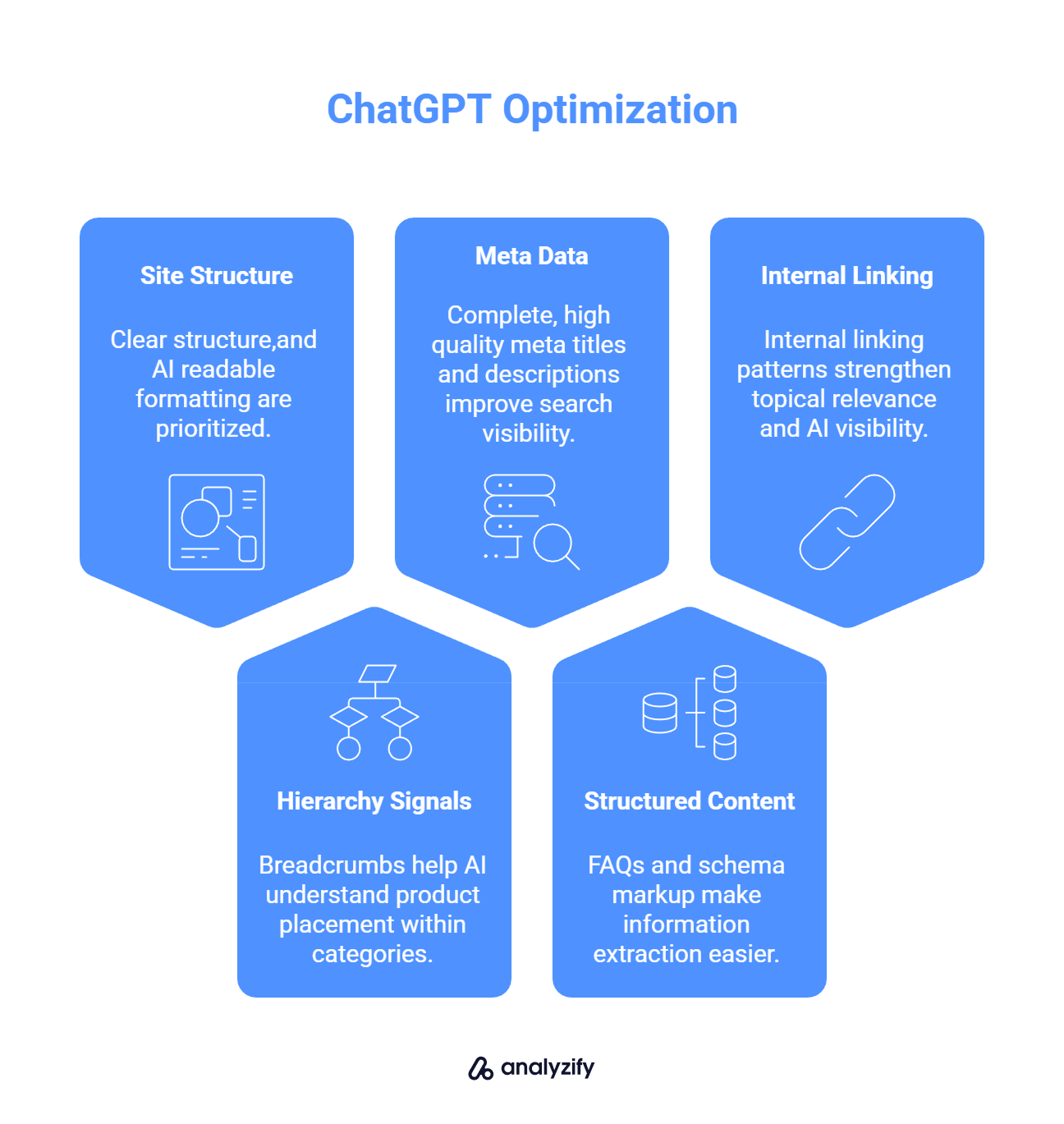
ChatGPT evaluates only a small number of pages during each query, prioritizing sites with clear structure, consistent metadata, and machine readable formatting.
Strong hierarchy signals like breadcrumbs help AI understand how your products fit within a broader category system.
Complete, high quality meta titles and descriptions improve the likelihood of being shortlisted in AI driven search.
Structured content such as FAQs and schema markup makes it easier for ChatGPT to extract authoritative, answer ready information.
Internal linking patterns, related search paths, and organized collections strengthen topical relevance, which increases AI visibility across product and category queries.
How ChatGPT Generates Recommendations
ChatGPT does not browse the entire internet for every query. It follows a fast, highly selective process that starts with running a few targeted searches, then filtering the results to identify the pages that look most relevant.
This early filtering step is where most stores disappear. Understanding how this filtering works makes it easier to design a store that ChatGPT can actually interpret.
The Initial Search and Filtering Step
ChatGPT typically performs multiple variations of a search query. From there, it creates a preliminary list of URLs and immediately eliminates pages that look unclear, poorly structured, or irrelevant.
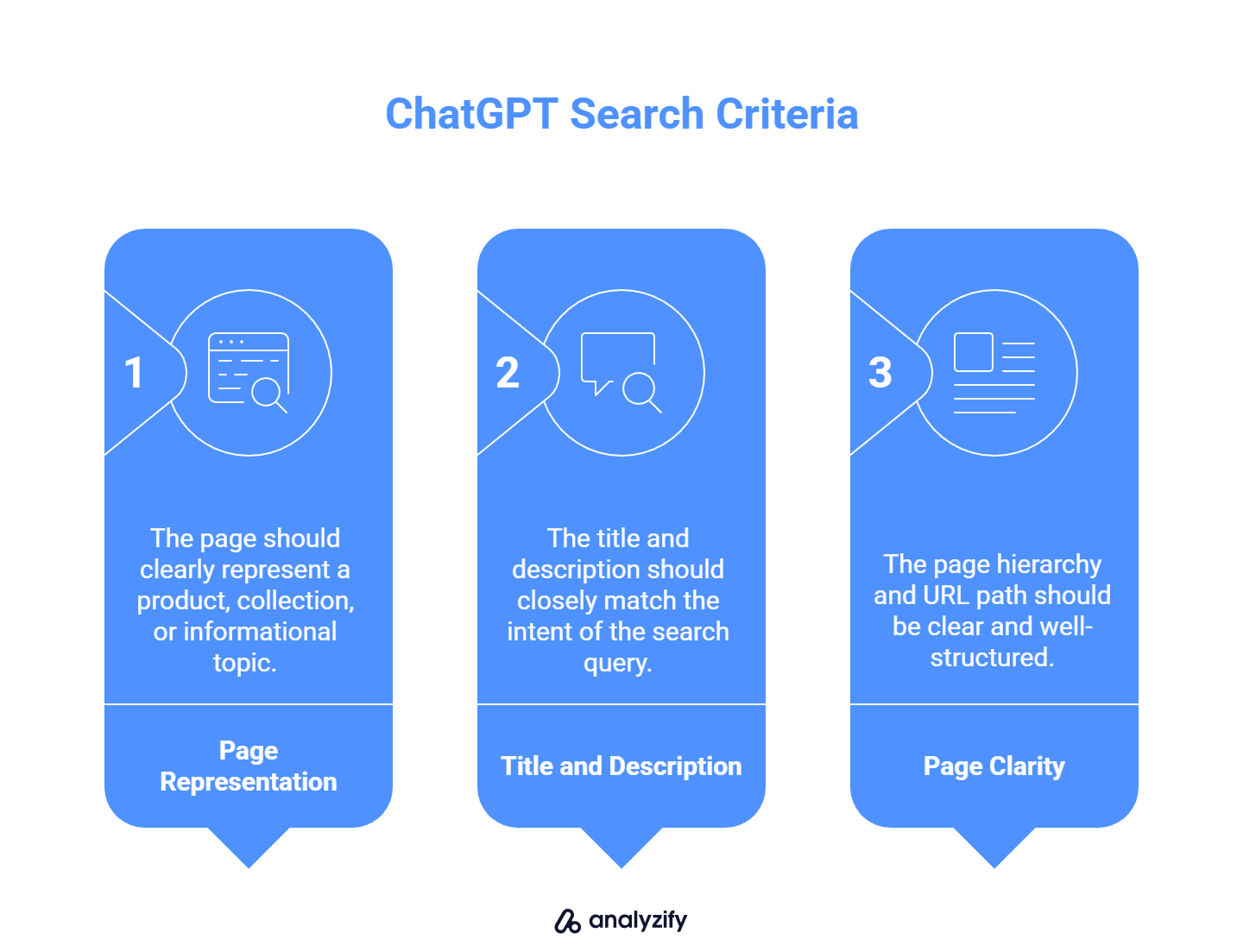
This early shortlist depends on signals such as:
Whether the page clearly represents a product, collection, or informational topic
How well the title and description match the intent of the query
The clarity of the page hierarchy and URL path
Only a small group of pages survive this stage, which means the structure of your content plays a direct role in whether you stay in the evaluation loop.
The Shortlist ChatGPT Actually Reads
Once the first filtering pass is complete, ChatGPT selects a handful of pages to read in full. This is the most important stage because these pages form the basis of its final recommendation.
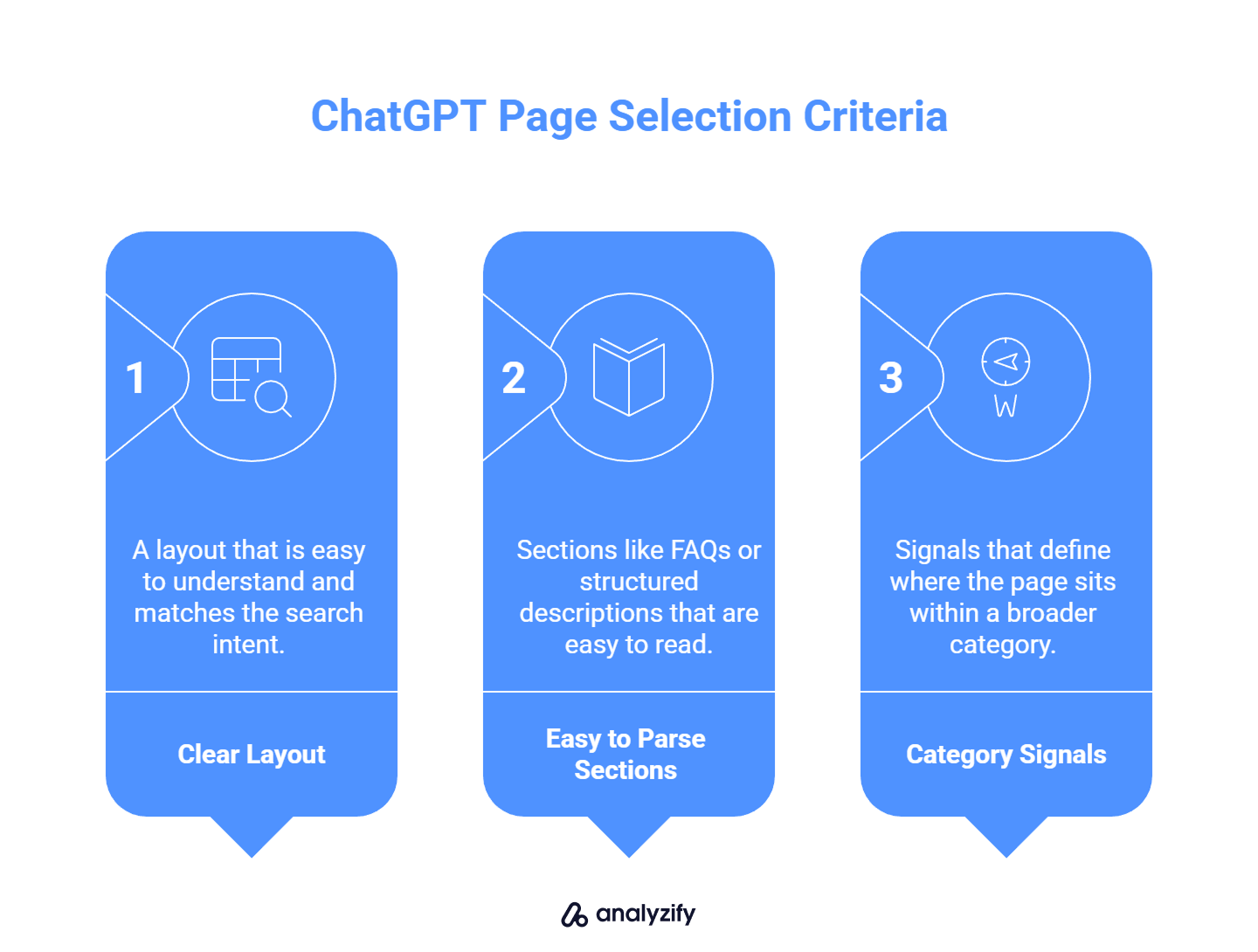
A page is more likely to be fully processed if it offers:
A clear layout that matches the search intent
Sections that are easy to parse, such as FAQs or structured descriptions
Signals that define where the page sits within a broader category
These signals help ChatGPT understand what the page is about without needing to inspect dozens of other results.
Consensus Building Across a Few Sources
After reading the shortlisted pages, ChatGPT looks for overlap. If several pages mention similar brands, features, or attributes, those elements naturally rise into the final answer.
This means your goal is not only to have a strong page but to make that page similar to what AI expects from a high quality reference.
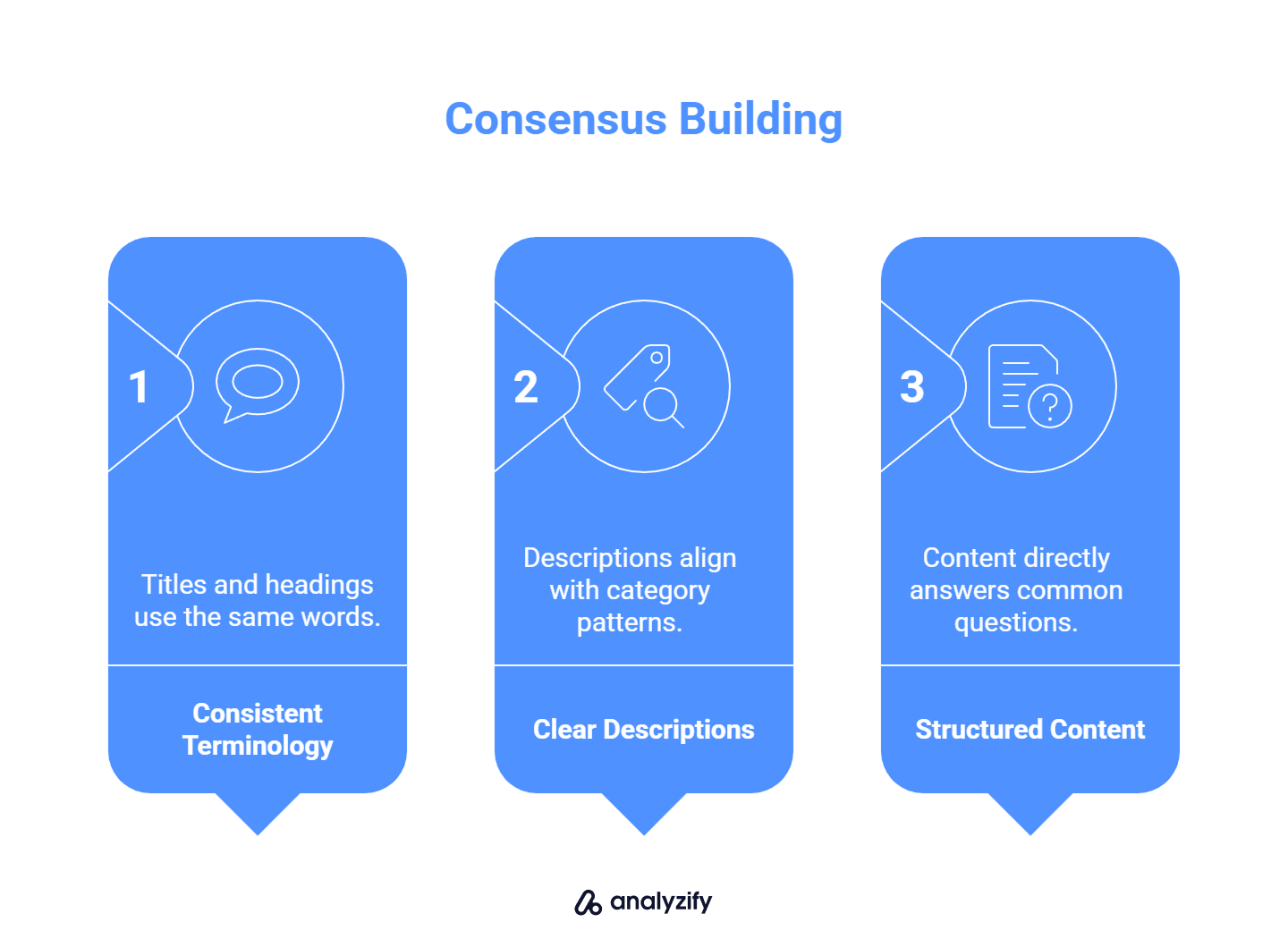
A quick example of what matters in this stage:
Consistent terminology in titles and headings
Clear descriptions that match category level patterns
Structured content that answers common questions directly
When ChatGPT identifies enough agreement between the sources it has read, it stops searching. It answers the user based on that consensus.
Bonus: Learn how ChatGPT’s new shopping feature displays Shopify products
Why This Process Matters for Shopify Stores
Most stores never reach the shortlist simply because their structure does not match what ChatGPT expects when scanning the web. Pages that lack clear metadata, hierarchy, or helpful sections are filtered out before the AI even has a chance to read them.
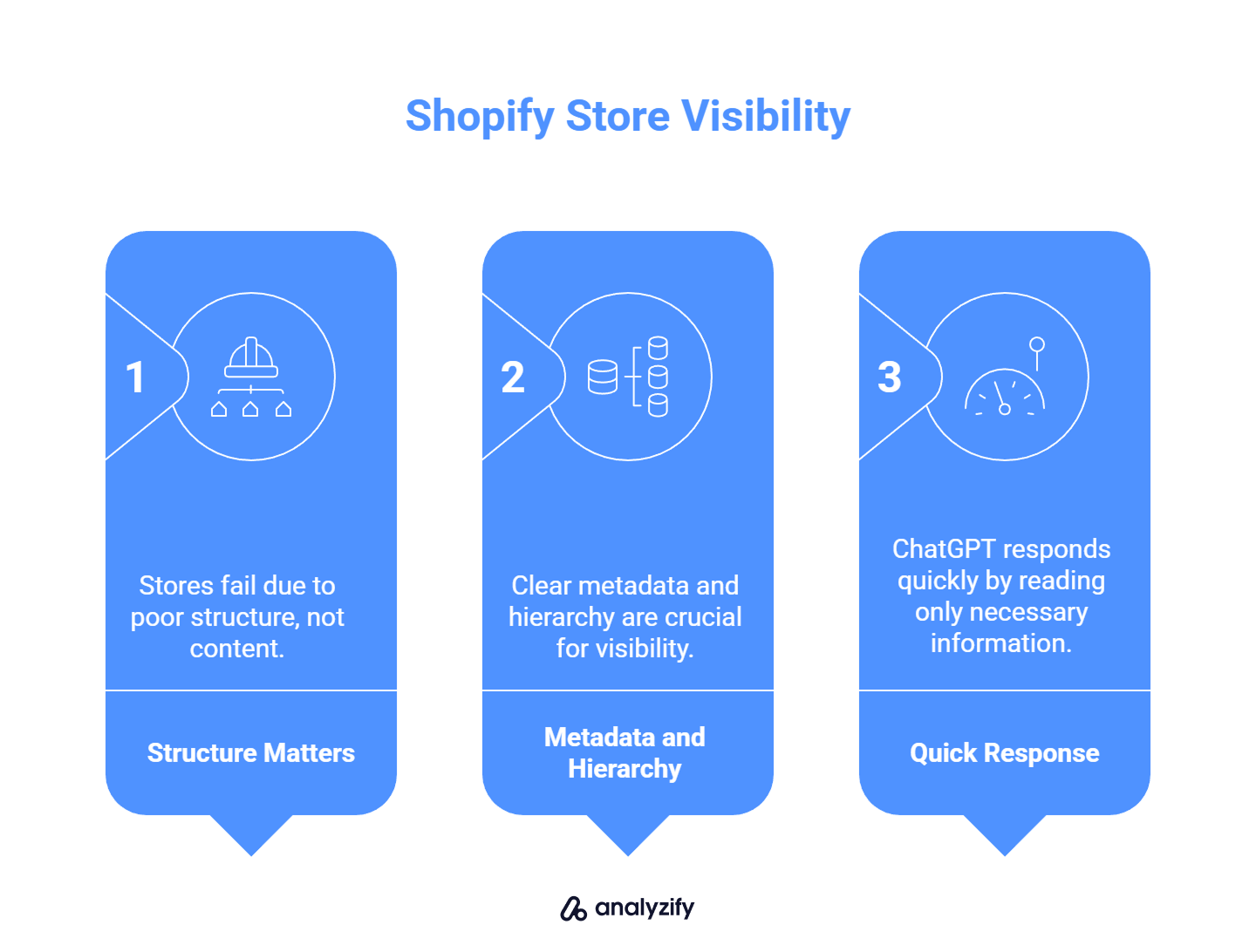
For a Shopify store, this turns visibility into a structure problem rather than a content volume problem.
Before moving into optimizations, it is important to understand that ChatGPT responds quickly because it reads only what it needs. Your store becomes visible when it provides the right signals early in this filtering process.
 Fix Shopify SEO Issues at the Source - Broken Links, 404s, and Structure
Broken Links Are Hurting Your SEO
404 errors waste your link equity and reduce your store’s visibility on Google.Why Shopify Store Structure Plays a Direct Role in AI Visibility
When ChatGPT or any LLM tries to understand a Shopify store, the first signals it interprets come from how the store is organized. The hierarchy you create influences how easily AI systems can classify your products and understand what each page represents. Unlike human users, AI relies heavily on structural clarity rather than visual design or branding cues.
Hierarchy Signals Shape How AI Classifies Your Pages
Every store has collections, product pages, and supporting information. The relationship between these elements determines how clearly the store communicates its purpose.
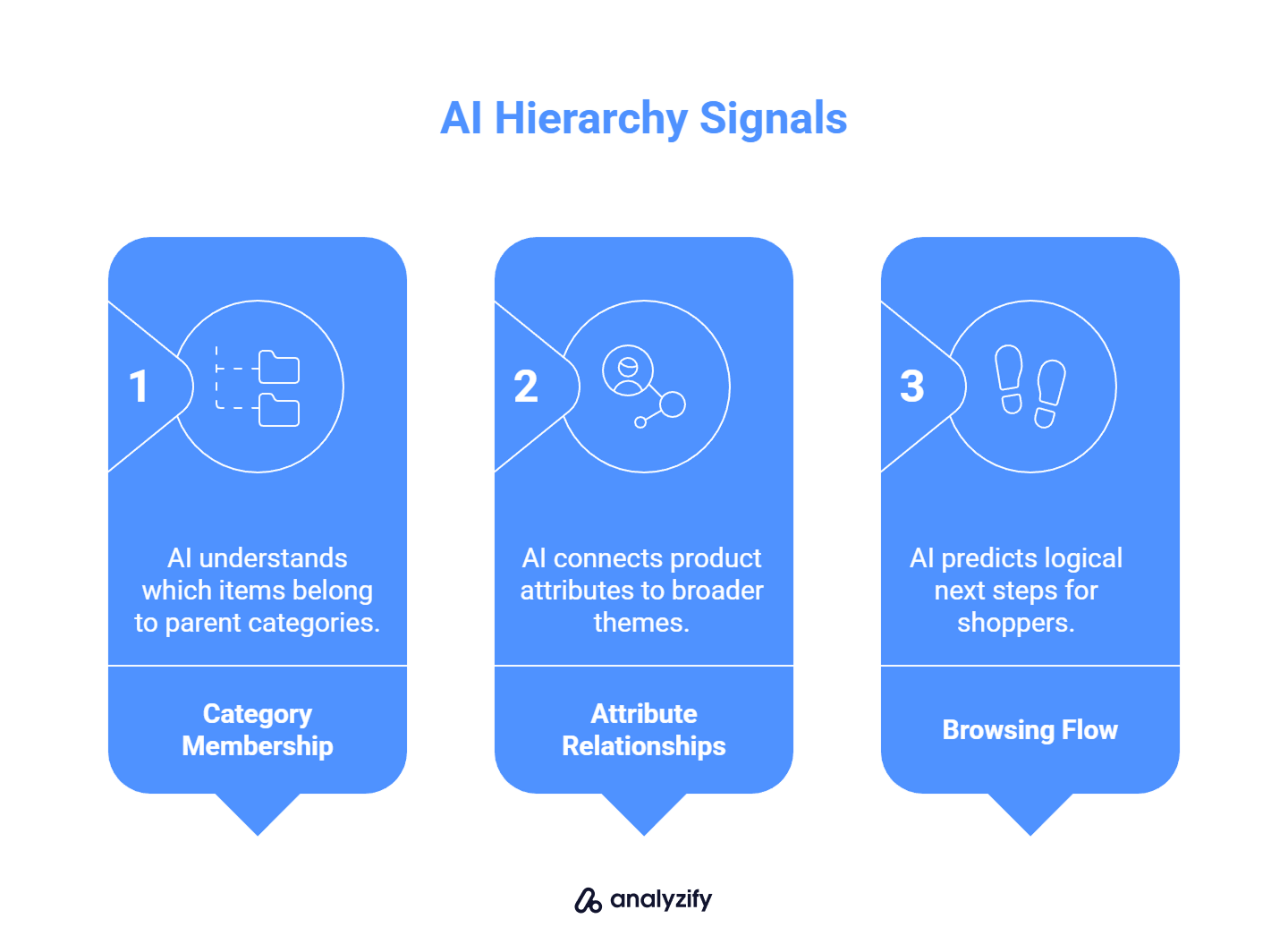
A well formed hierarchy gives AI unambiguous clues about:
Which items belong to which parent category
How specific product attributes relate to broader themes
Where a shopper would logically move next in the browsing flow
When this structure is ambiguous, AI systems struggle to position the store within a category, which lowers the likelihood of being recognized in thematic or product oriented queries.
Metadata Defines Purpose and Context
Titles and descriptions are among the strongest indicators of relevance. If they are incomplete, inconsistent, or written without reflecting what the page truly offers, AI has limited context to work with.
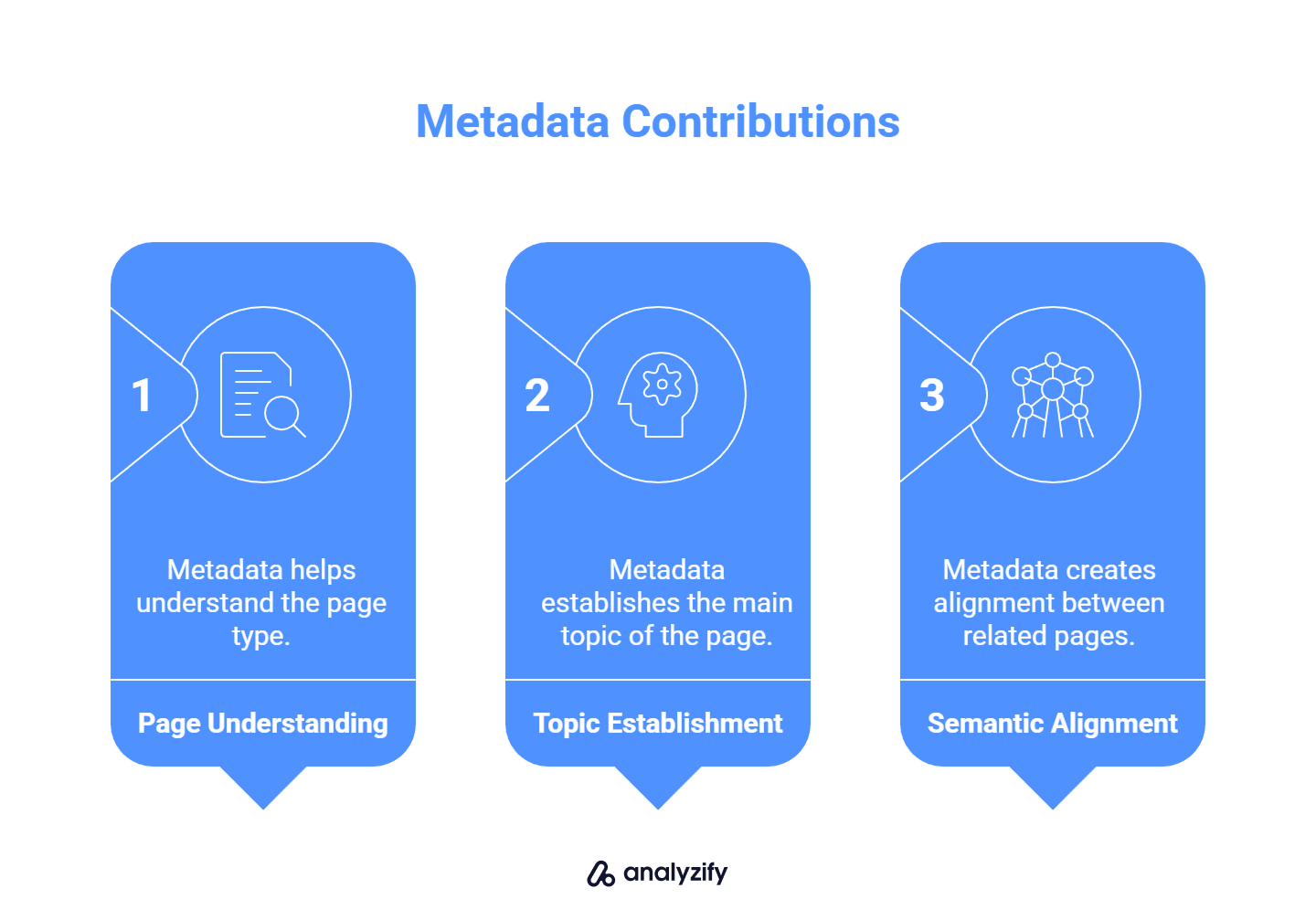
Well defined metadata contributes to:
Understanding the type of page (product, category, informational)
Establishing the main topic or attribute the page supports
Creating semantic alignment between related pages
This alignment determines how confidently AI can associate your store with specific search terms or product requests.
Supporting Content Adds Clarity Where Needed
Some pages require additional layers of explanation to signal expertise and completeness. Structured elements such as question and answer sections, attribute summaries, or contextual notes help AI interpret the page without guessing.
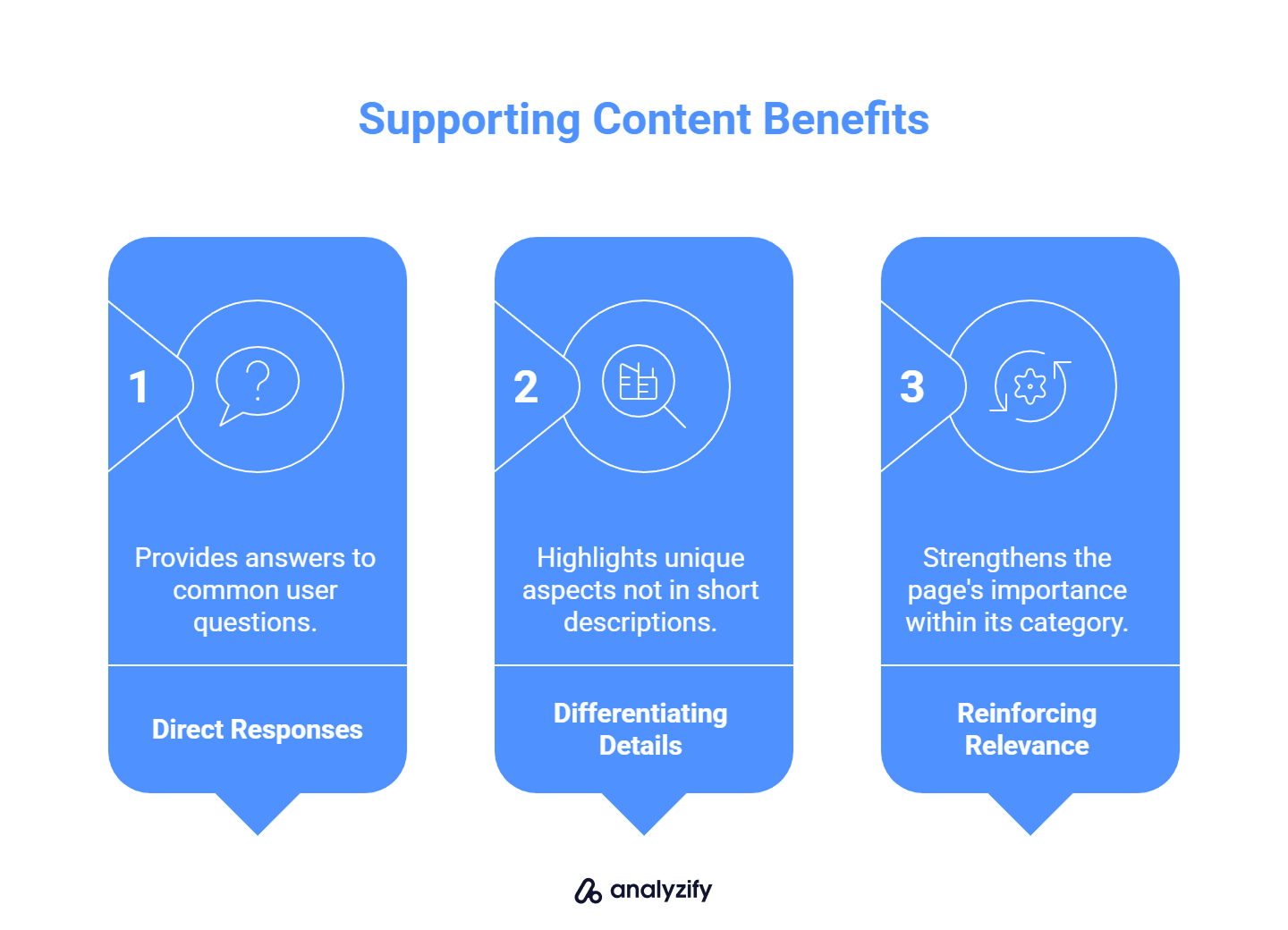
These elements improve clarity by:
Providing direct responses to common user intents
Highlighting differentiating details that may not fit into short descriptions
Reinforcing the relevance of the page inside its category
Supporting content becomes especially important for categories where many stores offer similar products and the AI needs distinctions to work with.
Bonus: Discover How to optimize your content for LLMs!
Internal Pathways Strengthen Topical Interpretation
How users move between pages also matters. Clear paths from product to collection, collection to subcollection, and related item to related item help AI understand your topic depth.
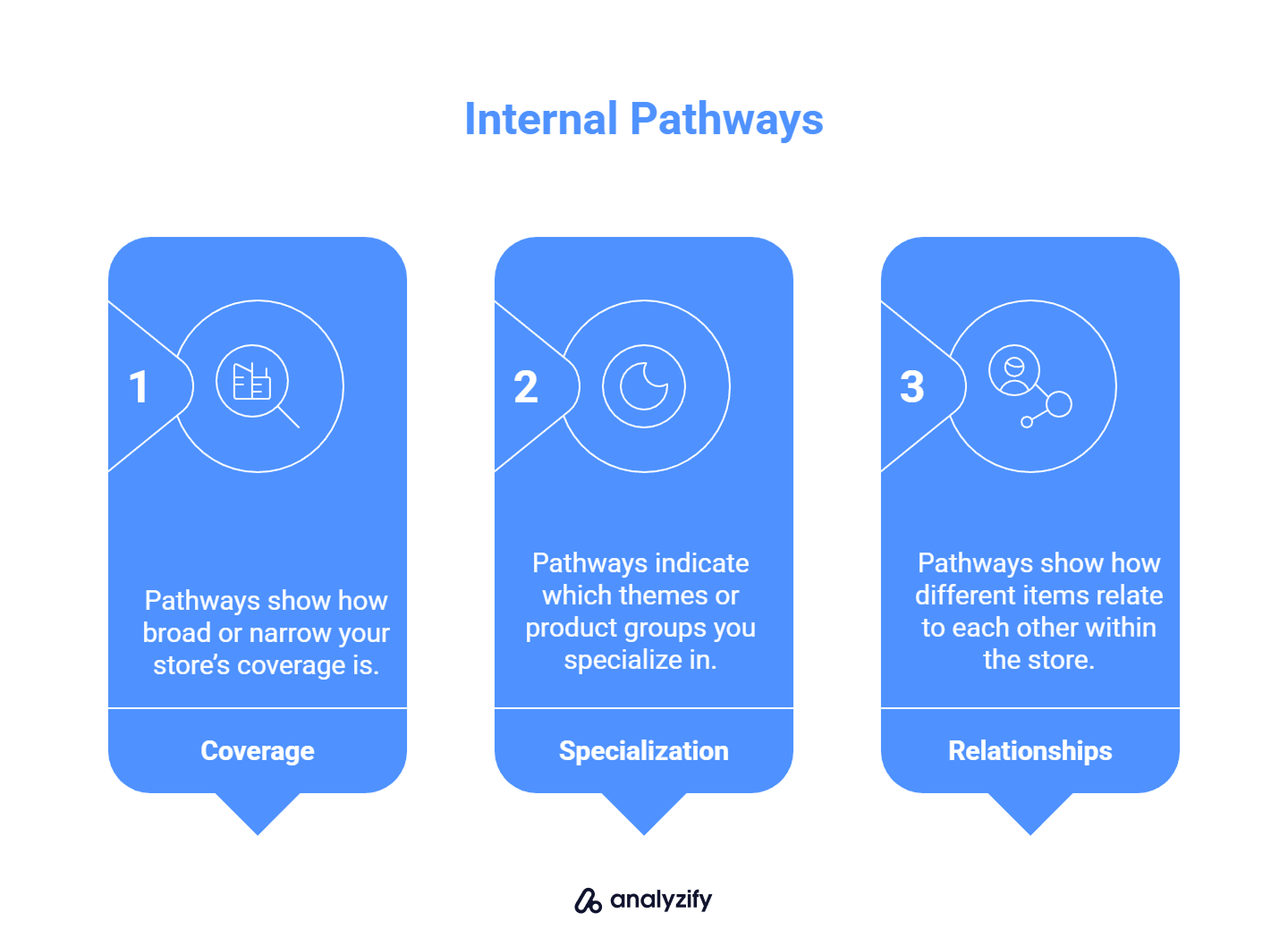
These pathways indicate:
How broad or narrow your store’s coverage is
Which themes or product groups you specialize in
How different items relate to each other within the store
A cohesive internal structure signals that the store covers its topic responsibly and consistently, which increases its interpretability for AI driven systems.
Built to Scale - Works on Large Stores and Shopify Markets Managing Too Many Collections Manually?
Risify lets you manage navigation across multiple collections from one place - fast setup, no developer needed.How To Make Your Shopify Store More Visible Across AI Platforms
Improving how your store appears across AI driven platforms requires refining the elements that make each page easy for these systems to interpret. Whether the user is searching through ChatGPT, Perplexity, Gemini, or any other LLM, clarity and consistency across your catalog play a central role. These improvements do not require rebuilding your entire store; they simply help your content communicate its purpose more effectively.
Improve the Clarity of Collection and Product Relationships
When collections and products are grouped in a way that reflects a clear logic, LLMs can recognize how different parts of your catalog relate to one another. This reduces ambiguity and gives the model a stronger understanding of each page’s place within your store.
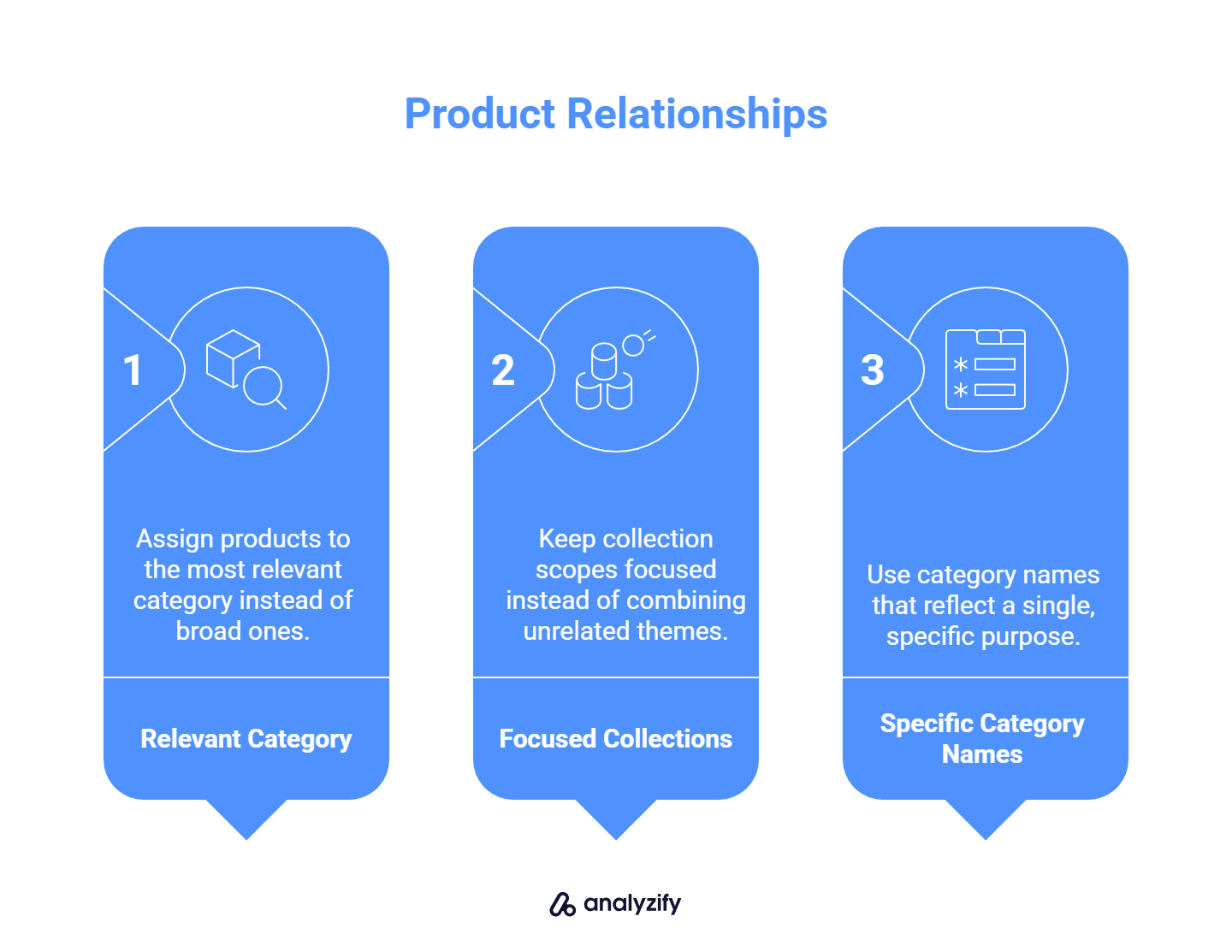
Useful refinements include:
Assigning products to the most relevant category rather than multiple broad ones
Keeping collection scopes focused instead of combining unrelated themes
Using category names that reflect a single, specific purpose
These adjustments create relationships that AI systems can interpret with confidence.
Standardize How You Present Titles and Descriptions
Page level clarity often starts with how titles and descriptions are written. AI platforms reference these elements heavily when determining what a page represents, especially when evaluating similar products within a category.
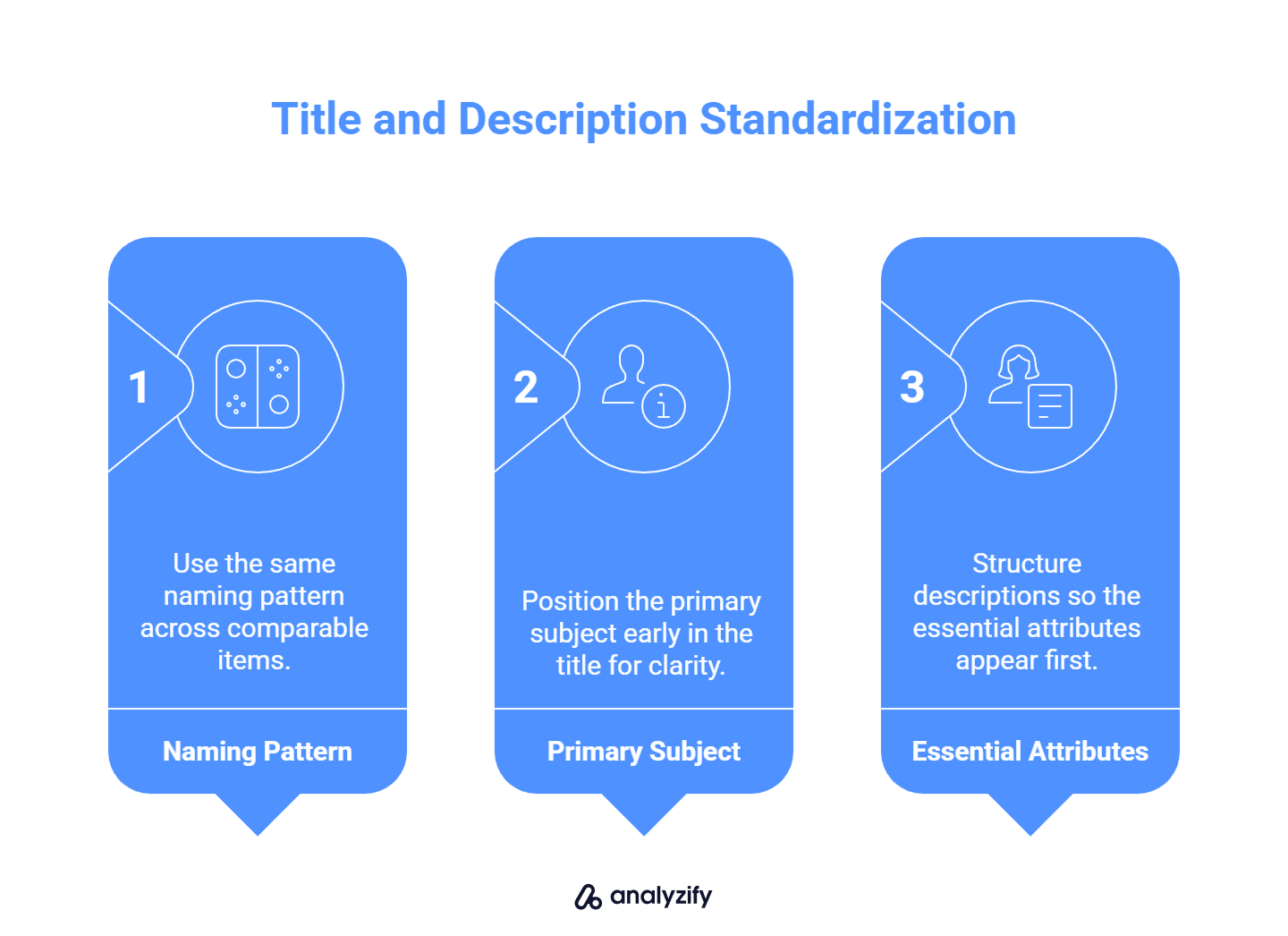
A more consistent approach includes:
Using the same naming pattern across comparable items
Positioning the primary subject early in the title
Structuring descriptions so the essential attributes appear first
This consistency helps different LLMs recognize your catalog as reliable and well organized.
Add Structured Answers for Contextual Depth
Some topics require direct explanations that extend beyond standard descriptions. Structured answers, especially in formats that separate questions and responses, give AI systems clearer insights into how buyers evaluate your products.
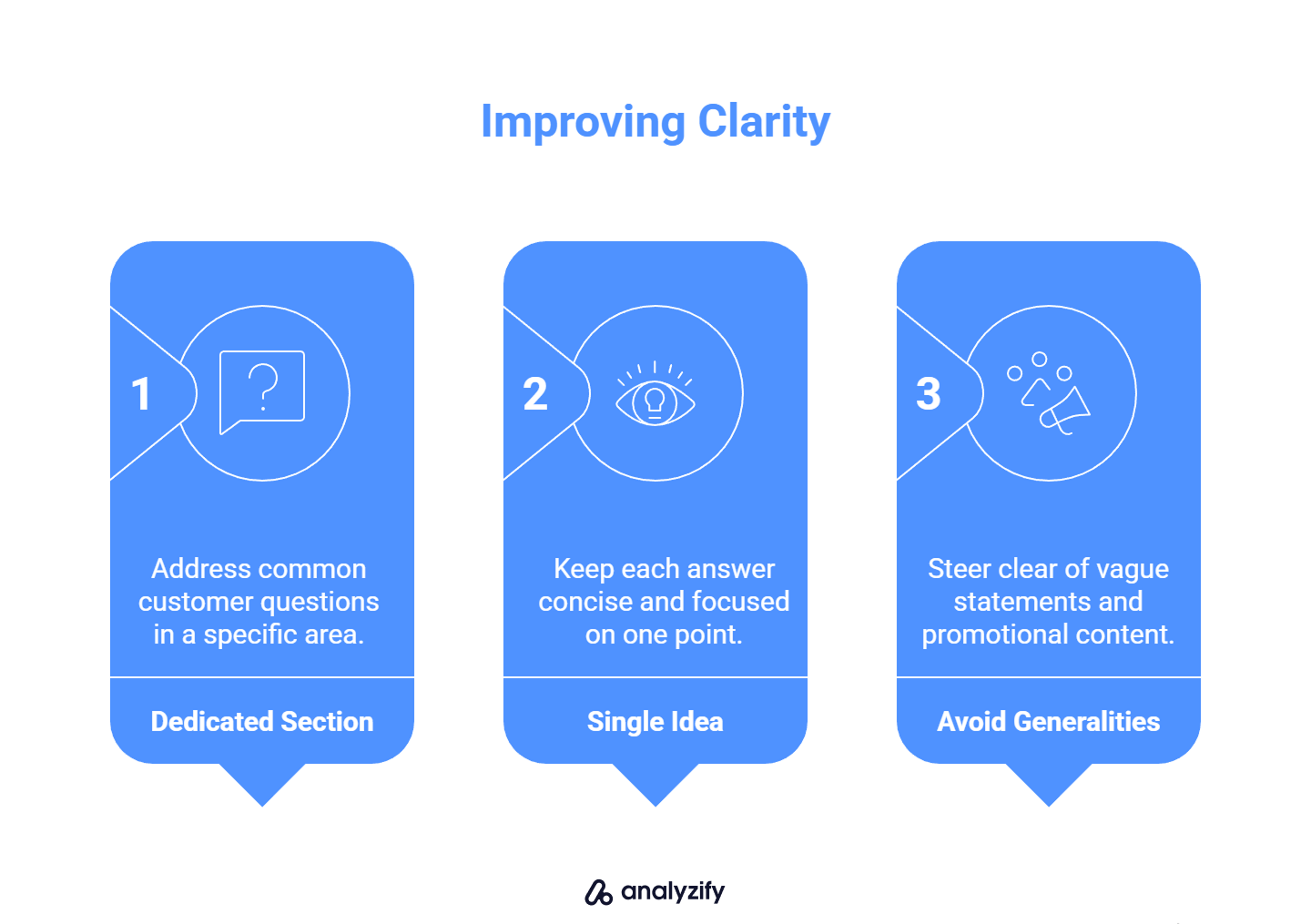
You can reinforce clarity by:
Addressing high frequency customer questions in a dedicated section
Keeping each answer focused on a single idea
Avoiding overly general statements or marketing language
This format is interpreted well by AI driven services that prioritize concise, factual clarity.
Provide Explicit Markers That Explain Page Content
LLMs interpret content more accurately when pages contain recognizable cues that define what type of information is being presented. These markers help AI distinguish between overview content, feature details, and supporting context.
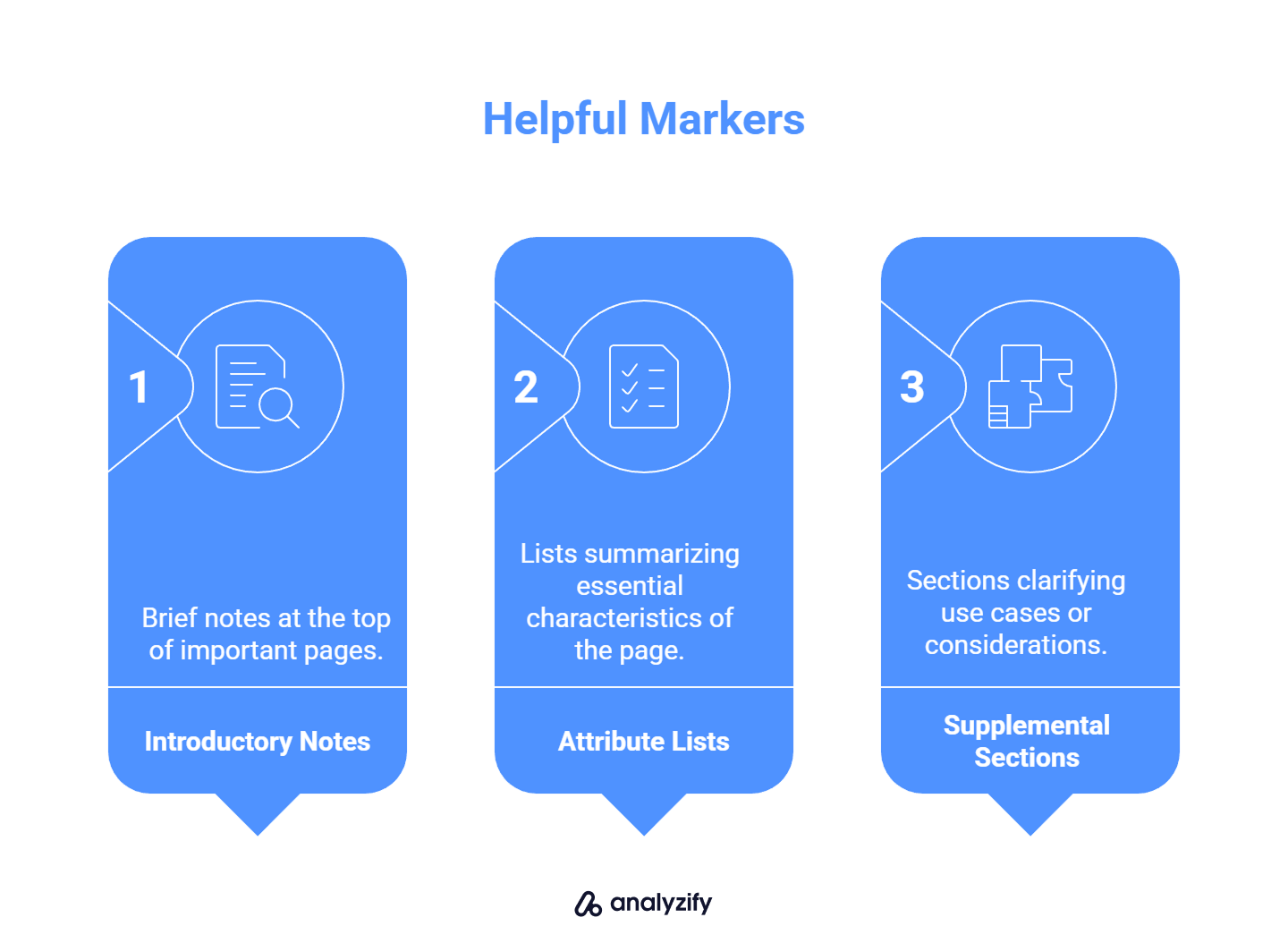
Helpful markers include:
Brief introductory notes at the top of important pages
Attribute lists that summarize essential characteristics
Supplemental sections that clarify use cases or considerations
These markers reduce ambiguity around the page’s purpose.
Strengthen Context Through Relevant Cross Connections
AI systems understand a catalog more effectively when related items and sections are connected in a meaningful way. This creates a clearer thematic network around your products and categories.
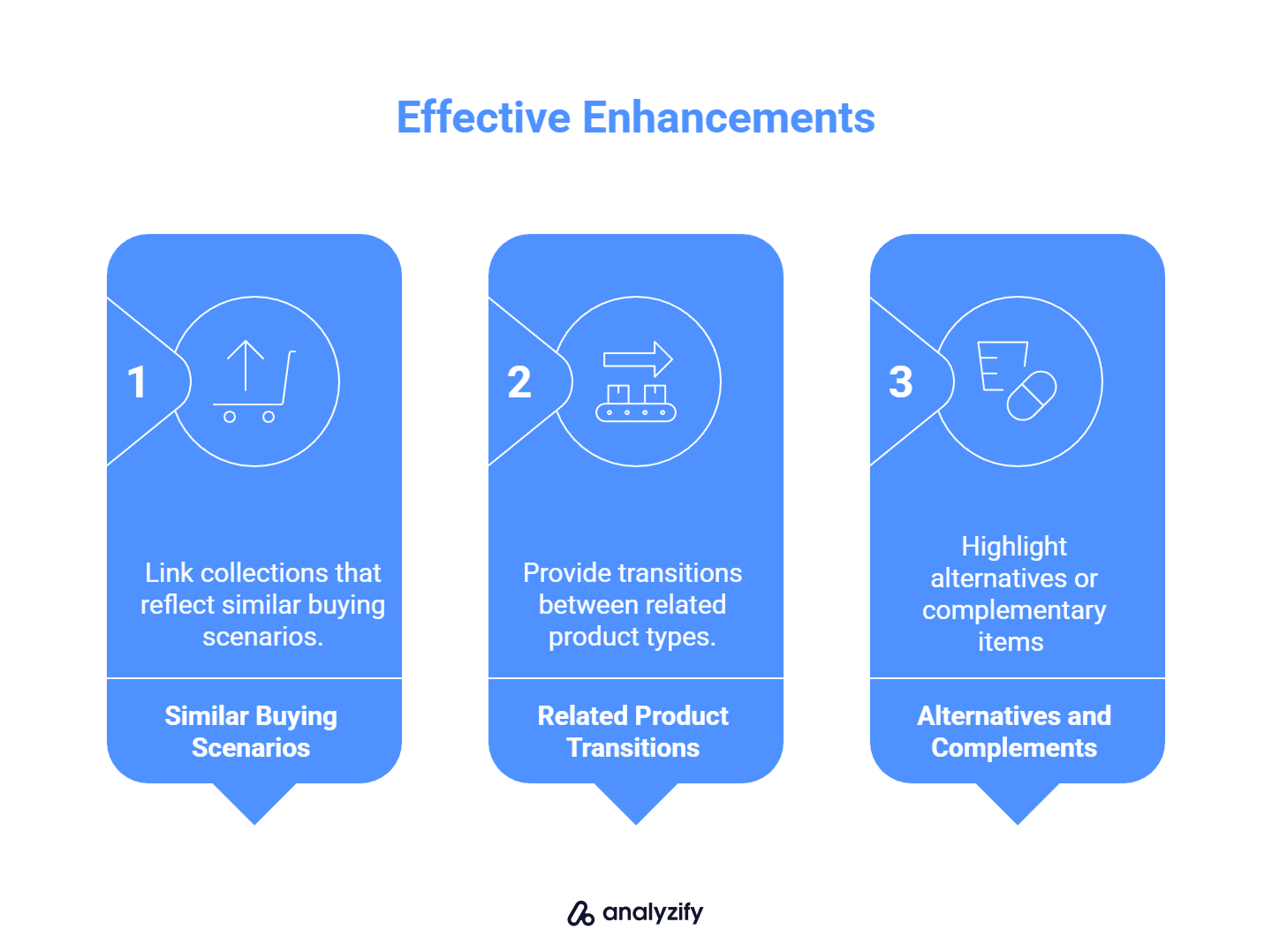
Effective enhancements include:
Linking collections that reflect similar buying scenarios
Providing transitions between related product types
Highlighting alternatives or complementary items when appropriate
These connections help AI form a more complete and accurate interpretation of your store’s topic coverage.
Improve Your Shopify SEO - Clean Structure, Better Rankings Struggling to Get Collection Pages Ranked?
Risify improves your internal linking and site structure by adding smart navigation elements to your Shopify store.Risify: One Tool That Makes Your Store AI Ready and AI Visible
Improving AI visibility becomes far more practical when everything can be managed from a single, unified system.
Risify brings the essential elements of catalog clarity into one place, allowing your store to present information in a way that AI platforms can interpret accurately. Instead of updating pages one by one or trying to maintain consistency manually, Risify applies structured logic across your entire catalog and keeps it aligned as your store grows.
Breadcrumbs That Establish Clear Pathways for AI
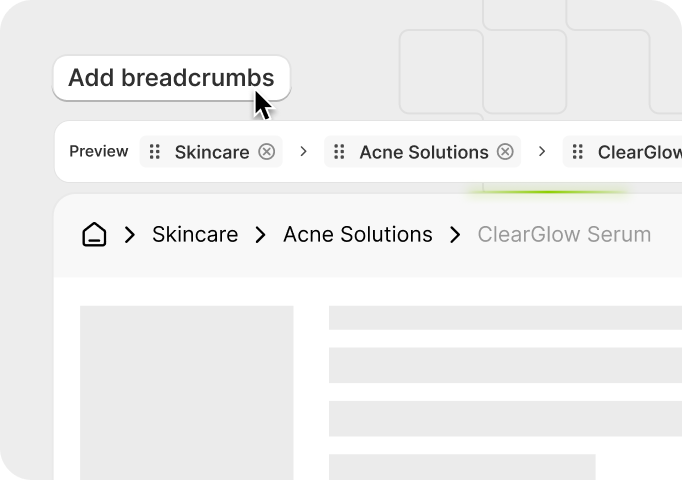
Breadcrumbs help AI identify how each page fits within your catalog. With Risify you can generate and maintains these pathways, ensuring that products and collections carry a consistent, well defined placement across your store.
Centralized Management of Meta Titles and Descriptions
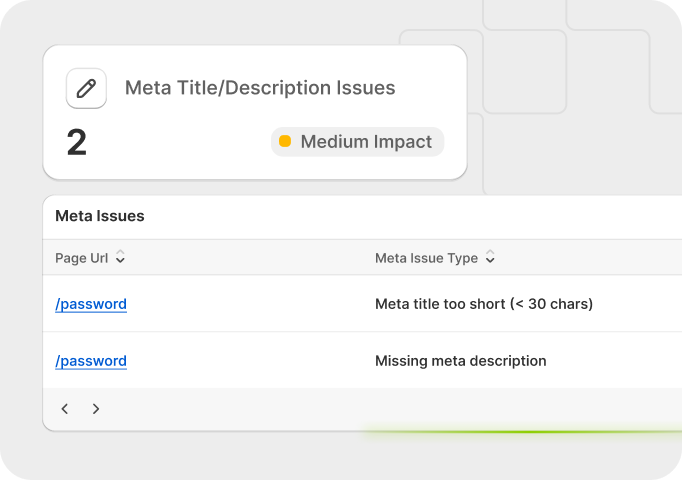
Instead of updating metadata manually across hundreds of pages, Risify provides a single dashboard where you can review, adjust, and standardize everything. This creates a stable and predictable structure that AI systems interpret more reliably.
Reusable FAQs for Stronger Interpretability
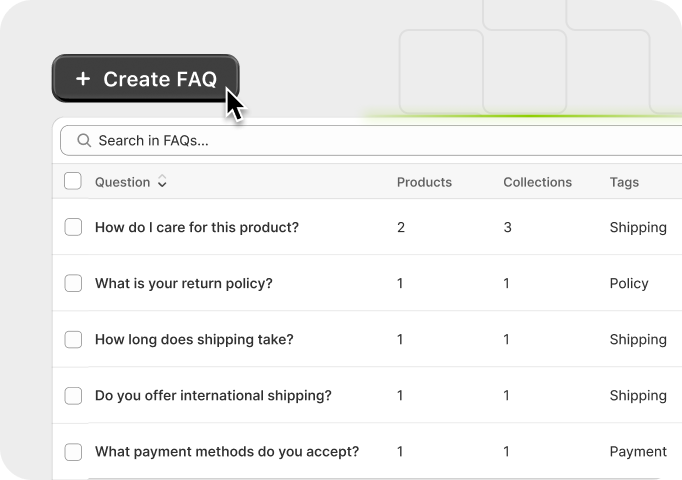
Risify lets you create FAQ sections that can be applied across products or collections without rewriting the same content. These structured explanations help AI understand the context of your catalog and provide clearer insights when generating responses.
Schema Implementation Built Into Your Store
Schema plays a key role in how AI understands the content and purpose of each page. Risify includes schema for breadcrumbs, FAQs, products, and other essential elements, ensuring that your catalog communicates in a format AI platforms recognize.
Related Searches and Collection Menus That Support Topical Interpretation
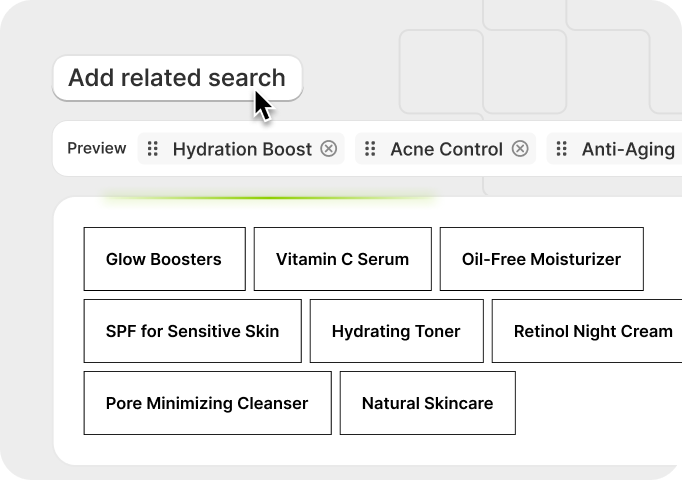
Risify creates structured entry points that help AI interpret the relationships between products, categories, and related topics. By defining these connections clearly, your store presents a more cohesive thematic environment.
Built for Shopify - No Code Needed - Easy to Manage Missing Navigation on Your Collection Pages?
Risify helps you add visual subcategory links that guide users and improve conversions without editing your theme.Boost Your Shopify Store’s Visibility in AI
As your store grows, keeping everything aligned becomes harder. Each new product introduces details that must match the standards you set earlier, and even small inconsistencies can make your structure more difficult for AI to read. Risify keeps these elements unified so your store remains clear and dependable over time.
With Risify, you get:
A store that stays consistent as it expands
Signals that AI platforms can interpret confidently
One place to manage elements that would normally require ongoing manual work
If you want your store to be easier for AI platforms to understand and surface at the right moments, try Risify and see how much clarity it brings to your setup.