









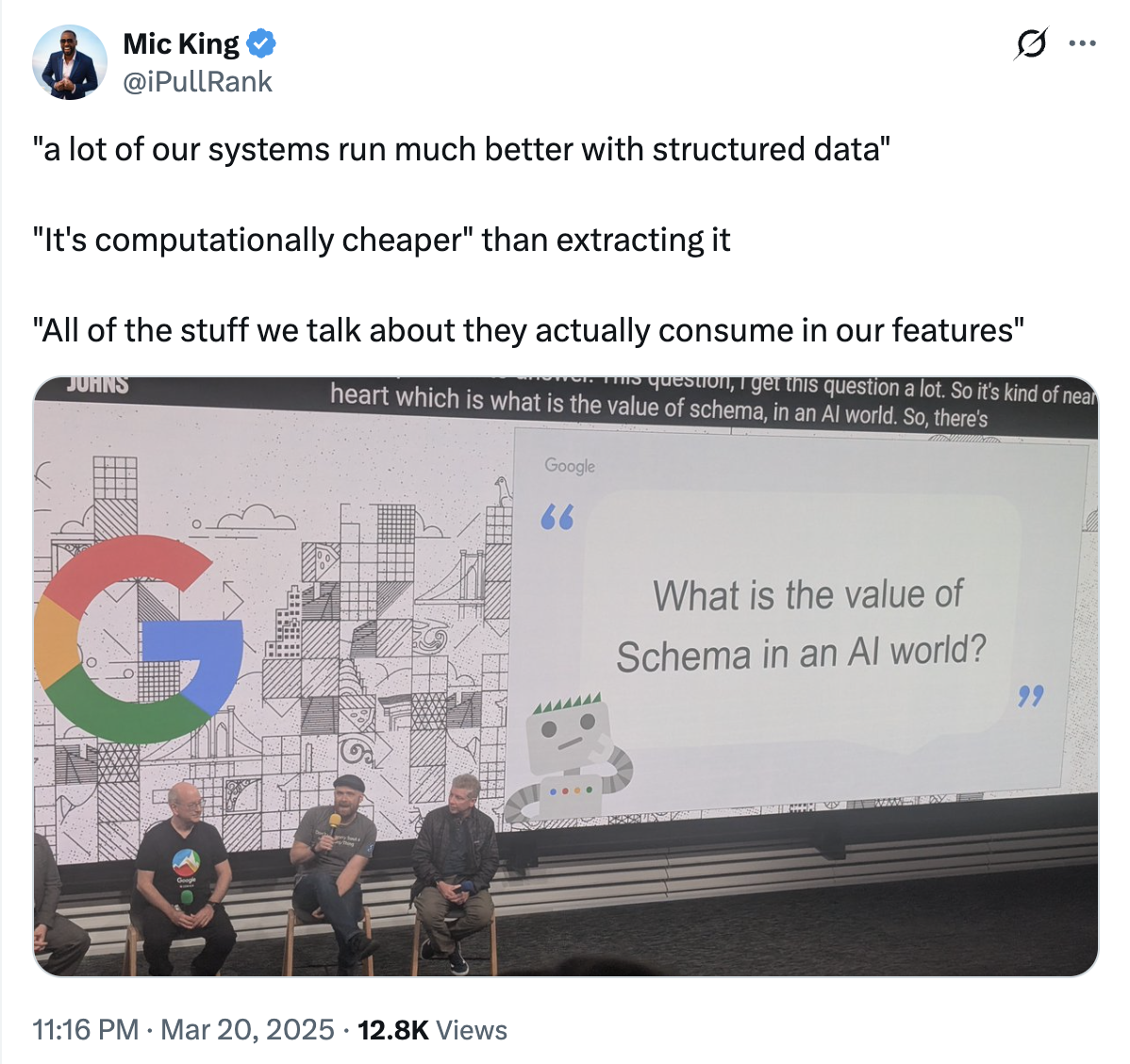
“A lot of our systems run much better with structured data. It’s computationally cheaper.”
That’s Ryan Levering, a Google software engineer, speaking at Search Central Live New York in March 2025.
Days earlier, Microsoft’s Fabrice Canel confirmed on stage at SMX Munich that schema markup directly feeds their LLMs.
These weren’t vague endorsements, they were the first public admissions that structured data now powers how AI systems understand and use web content.
This post walks through what changed, what the evidence shows, and what it means for anyone who wants their content to be visible in AI-driven search.
The Official Confirmations on Structured Data for AI Visibility
For years, the relationship between structured data and AI systems was speculative. People assumed schema helped, but nobody from a major platform had said so on the record. That changed in March 2025.
At SMX Munich, Fabrice Canel, Principal Product Manager at Microsoft Bing, made a direct statement: schema markup helps Microsoft’s LLMs understand content.
Search Engine Land covered the confirmation, and Canel confirmed it himself in the LinkedIn comments. He also added that generative AI systems “value fresh content in particular, partly as a reference check of their LLM training data.”
This was a specific, technical statement. Microsoft’s Copilot runs on the Prometheus model, which combines Bing’s search index with OpenAI’s GPT models through a technique called grounding. Schema markup feeds directly into that grounding process, it’s how the system identifies facts, entities, and relationships on a page before generating a response.
Days later, at Google’s Search Central Live in New York, Ryan Levering, a software engineer who works on structured data at Google, made an equally revealing statement. According to Mike King’s coverage, Levering said that “a lot of our systems run much better with structured data” and that it’s “computationally cheaper” than extracting information from unstructured HTML.
Search Engine Journal documented the full context.
Google’s official position is more guarded than Microsoft’s. Their documentation states no “special” schema is needed for AI features. But every public statement from Google’s team points in the same direction: structured data helps their systems understand content, which feeds into how AI features select and present information.
This is an important distinction. Google isn’t saying “add schema and you’ll appear in AI Overviews.” They’re saying their systems use structured data as one of many signals to understand what a page is about.
But when you combine that with Levering’s admission that structured data is computationally cheaper to process, the implication is clear: pages with good schema give Google’s AI less work to do and more confidence in the result.
Danny Sullivan, Google’s former Search Liaison, summed it up simply: “Good SEO is good GEO”, generative engine optimization isn’t fundamentally different from what you should already be doing.
It’s worth noting that OpenAI and Perplexity have not made equivalent public statements about how their systems use structured data. The transparency gap is real. But the direction from the two largest search platforms is clear, and as Schema App’s 2025 analysis noted, these confirmations shifted the entire industry’s understanding of what schema markup is actually for.
The Data Behind the Structured Data And AI Visibility
Official statements are one thing. Data is another. Here’s what the experiments show.
Search Engine Land ran the most rigorous test I found. Three identical single-page sites, same content, same keyword difficulty, with one variable: schema quality. The page with well-implemented schema was the only one to appear in AI Overviews and hit Position 3. The page with poor schema peaked at Position 8 and never triggered an AI Overview. The page with no schema was crawled but never even indexed.
| Good Schema | Poor Schema | No Schema |
|---|---|---|
| Position 3 | Position 8 | Not indexed |
| 6 keywords | 10 keywords | 0 keywords |
| AI Overview: ✅ | AI Overview: ❌ | AI Overview: ❌ |
SMA Marketing took a different approach, adding Wikidata references to article schema on a live client site to strengthen entity connections with Google’s Knowledge Graph. After statistical testing, they found a 66% increase in AI Overview rankings (p < 0.05), with significant increases in clicks and traffic from Perplexity and Copilot.
The broader data supports it. An AccuraCast study analyzing 2,000+ prompts across ChatGPT, AI Overviews, and Perplexity found that 81% of cited pages had schema markup. A Dataslayer test in ChatGPT Shopping compared two listings for the same product, one with complete Product schema, one with basic markup. The complete one appeared in 8 out of 10 queries. The basic one appeared twice. BrightEdge’s research confirms the same pattern, higher AI citation rates on pages with robust structured data.
Five studies, different methodologies, different platforms, same direction.
None of these are isolated data points. They come from different methodologies, different platforms, and different research teams, and they all point in the same direction. The consistency of the findings across these different approaches makes the signal hard to dismiss.
How Structured Data Feeds AI Search Systems
Most AI search tools don’t answer questions from memory alone. They use a process called retrieval-augmented generation, the AI searches the web in real time, pulls relevant content, and uses it to build a response. Two steps: find the best sources, then use them to write an answer. Structured data makes that first step dramatically more efficient.
Each platform does this differently, but the role of structured data is consistent:
Google AI Overviews pull from Google’s Knowledge Graph, over 500 billion facts about entities and relationships. Pages with structured data are easier to parse because the facts are already labeled. As Ryan Levering put it, it’s “computationally cheaper” than extracting the same information from unstructured HTML. At billions of pages, that efficiency becomes a deciding factor.
Microsoft Copilot runs on Prometheus, which feeds Bing’s index into GPT through a grounding process. Schema markup shapes Bing’s understanding of a page before any information reaches the language model. Better structured input means better grounded responses.
ChatGPT Shopping considers structured metadata from third-party providers, price, descriptions, reviews, when generating product recommendations. It doesn’t match keywords. It interprets intent and looks for products with data structured enough to match it confidently. If yours isn’t, it moves on to a competitor’s.
The common thread: AI systems need to verify and extract quickly. Schema makes that possible. Without it, they guess, and increasingly, they just skip the source instead. When schema contradicts on-page content, Google doesn’t reconcile the difference. It discounts the markup entirely.
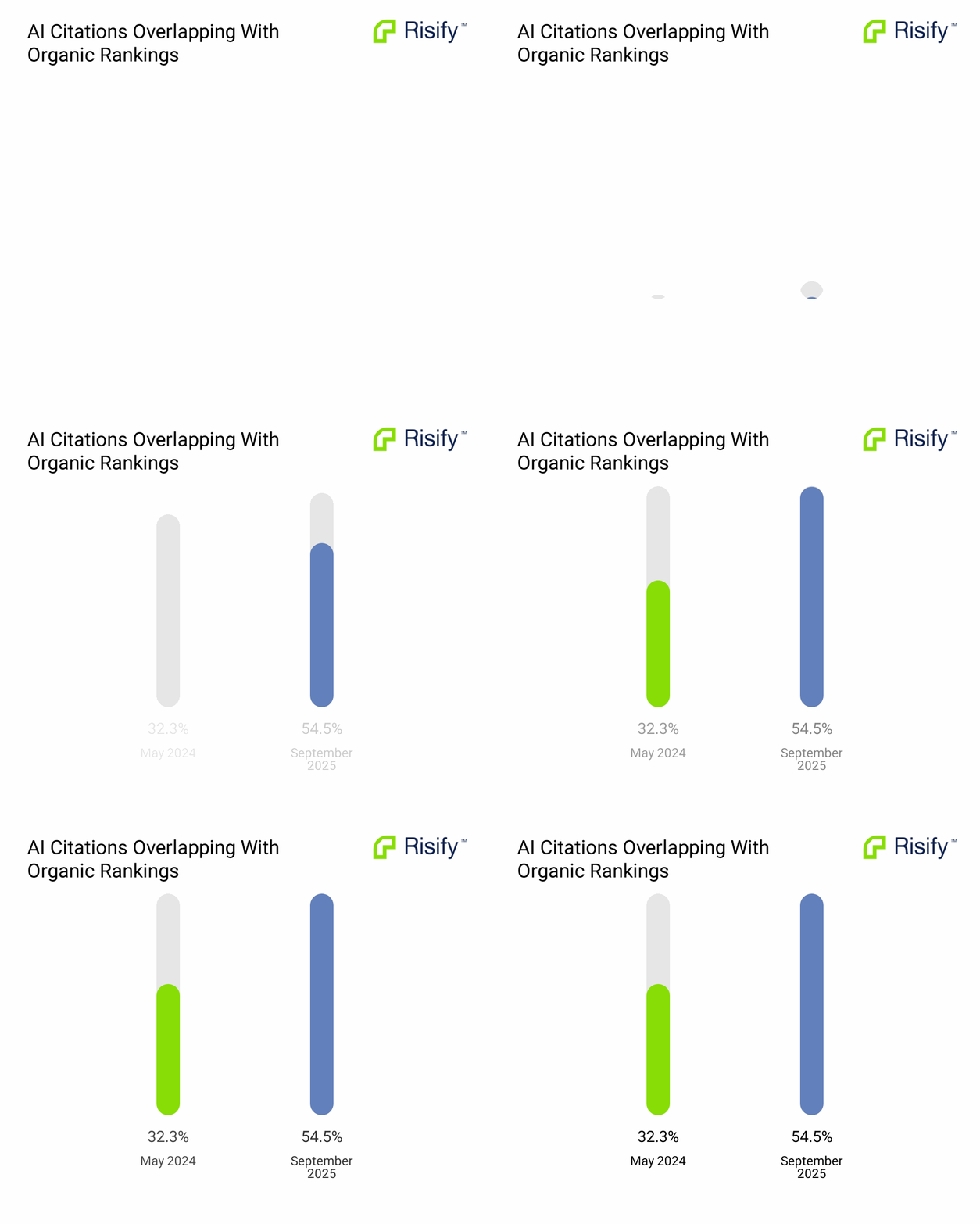
BrightEdge’s 16-month study adds context: AI Overview citations now overlap 54.5% with organic rankings, up from 32.3% in May 2024. SEO fundamentals and AI visibility are converging, the same structured data that helps you rank is what gets you cited.
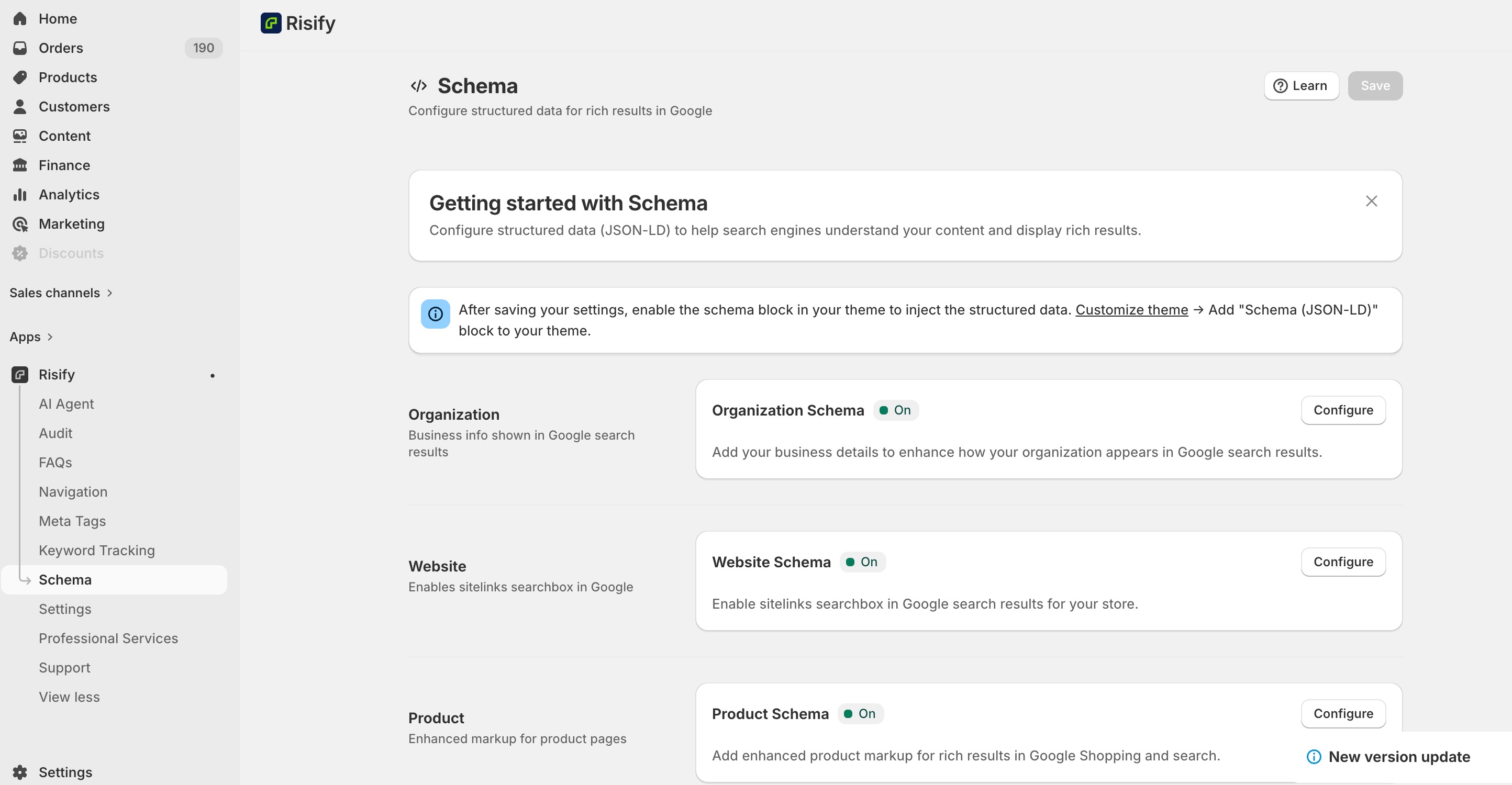
For Shopify stores, this means Product, FAQ, and BreadcrumbList schema need to be implemented correctly. Risify handles all three natively, one-click activation, built-in validation, no code required.
Which Schema Types Matter Most for AI Visibility
Not all schema types carry equal weight for AI visibility. Based on what the research and platform behavior consistently highlight, these are the types that matter most right now.
Product Schema
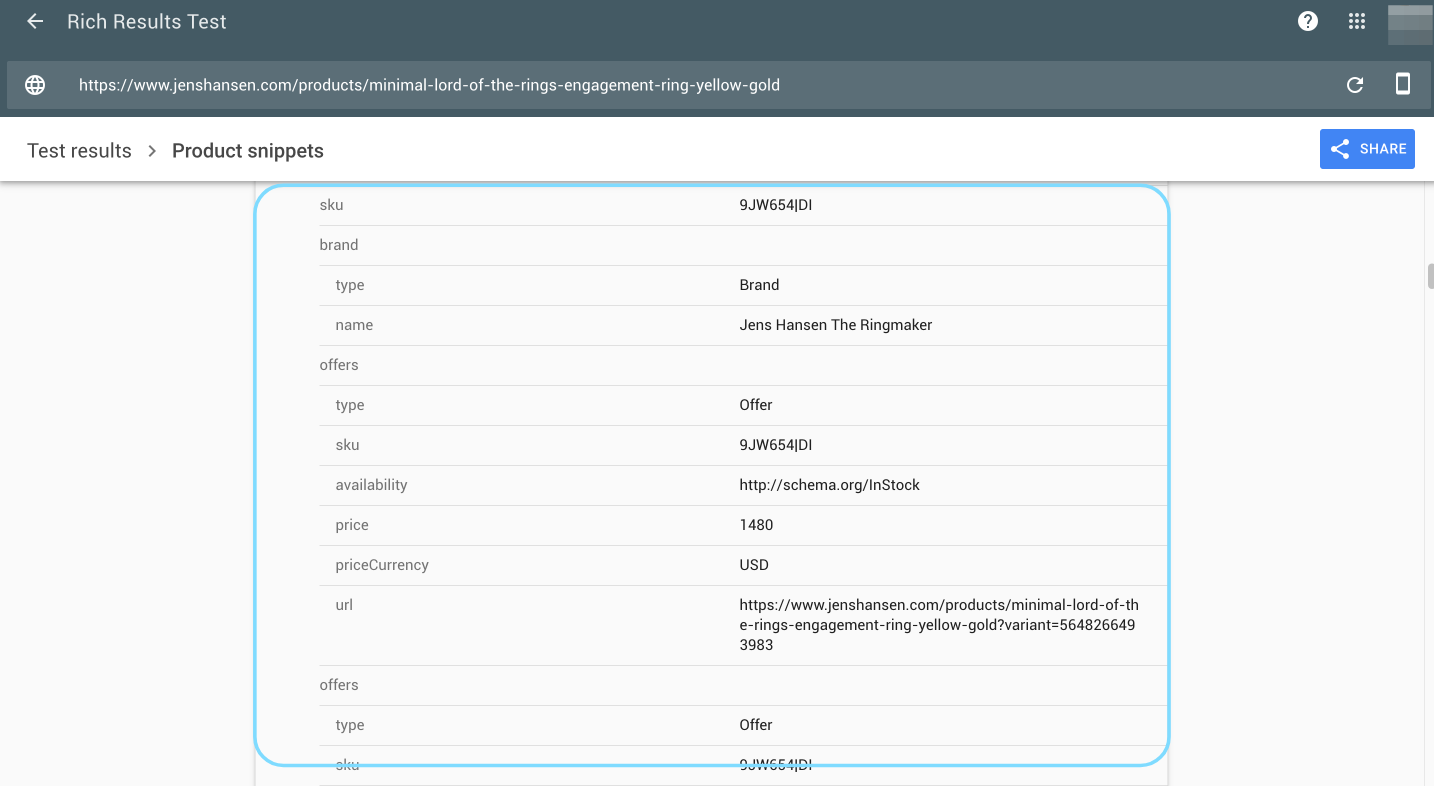 Product schema is essential for any e-commerce store. It’s what ChatGPT Shopping uses to understand what you sell, at what price, whether it’s in stock, and how customers rate it. Without it, your products don’t exist in conversational commerce.
The more complete your Product schema is, including GTIN identifiers, aggregate ratings, availability, shipping details, and return policies, the more confidently an AI system can recommend your product over a competitor’s.
FAQPage Schema
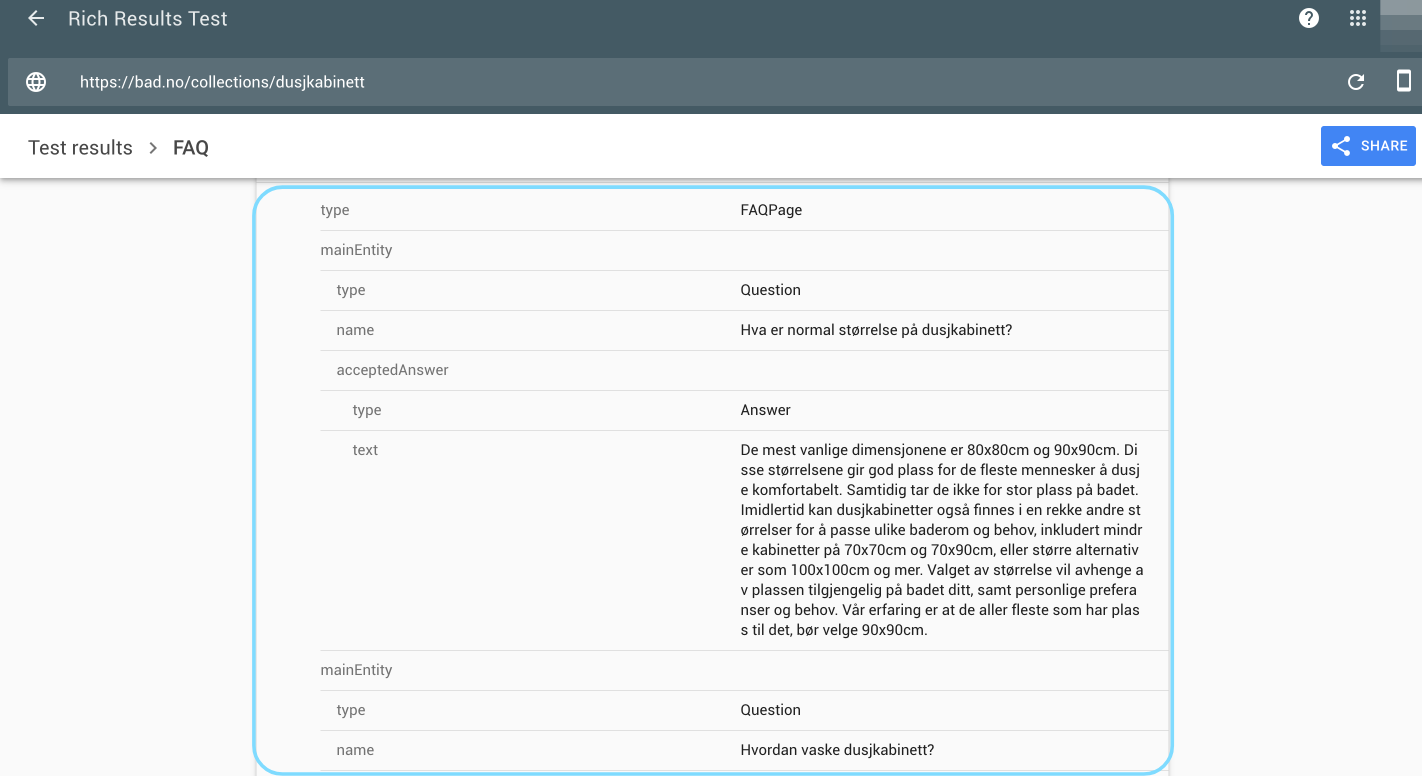 FAQPage schema enables direct answer retrieval. When an AI system needs to answer a question and your FAQ content is properly marked up, it can extract the answer without parsing your entire page. This is relevant across Google AI Overviews, ChatGPT, and Perplexity.
For e-commerce stores specifically, FAQs about shipping, returns, sizing, and product care are exactly the types of questions AI shopping assistants need to answer before making a recommendation.
👉 See how Risify manages centralized FAQs with proper schema: Risify FAQ
Organization Schema
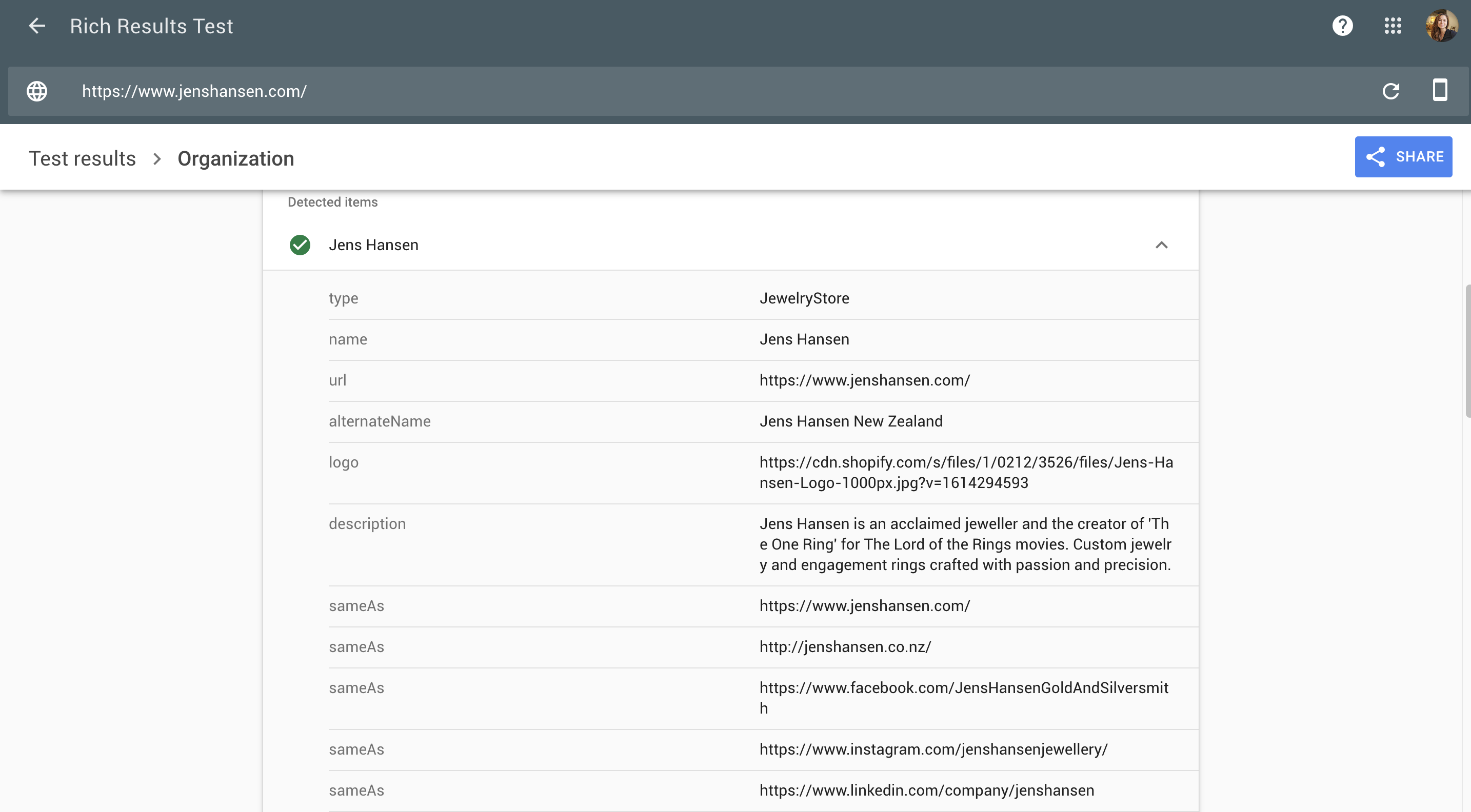 Organization schema defines your brand’s entity identity. According to Search Engine Journal’s analysis, this reduces ambiguity for AI systems, it tells them who you are, what you do, and how your brand connects to other entities on the web. For stores that sell products from other brands, this distinction is critical.
Article Schema
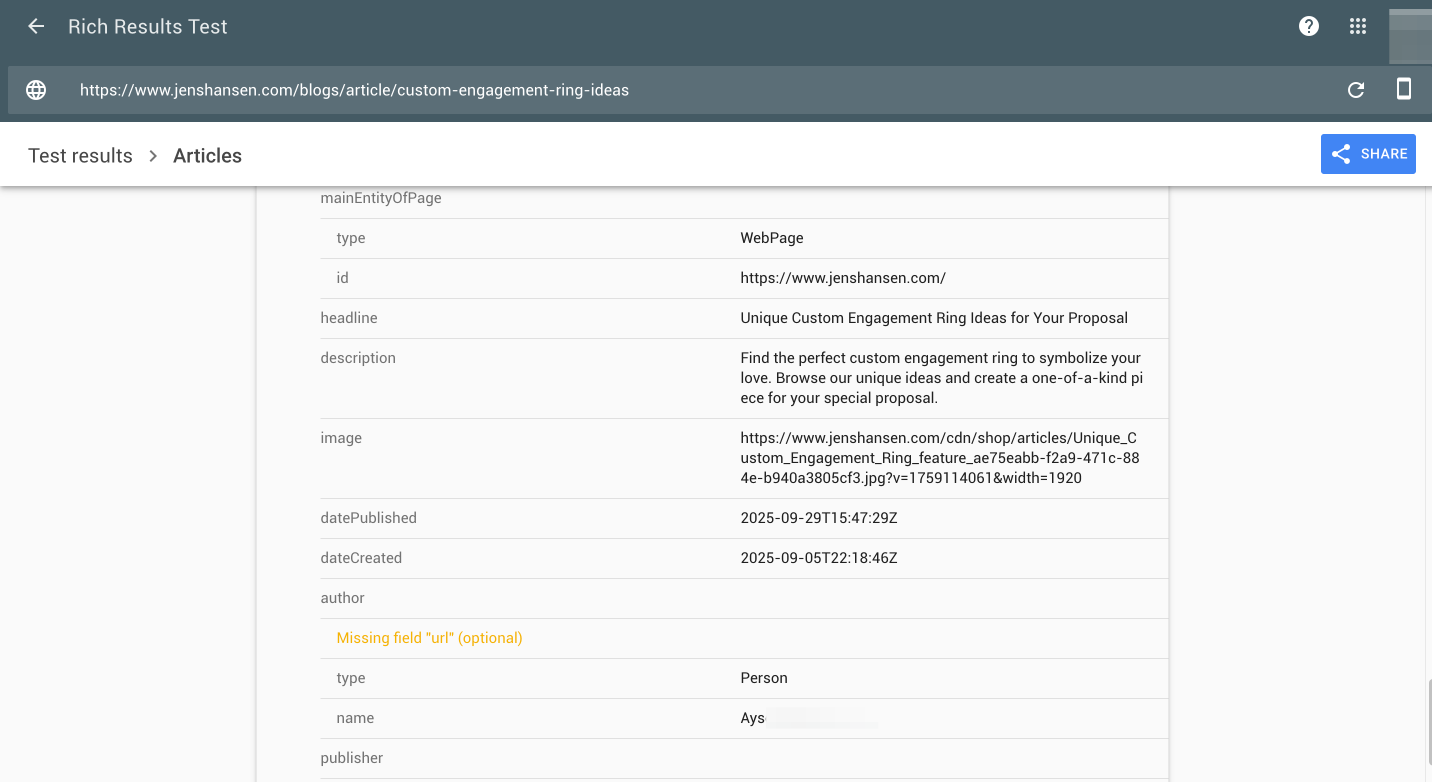 Article schema provides publication dates, author information, and publisher details. These are credibility signals that AI systems use when deciding whether to cite a source. If your blog content lacks Article schema, the system has fewer reasons to trust it.
BreadcrumbList Schema
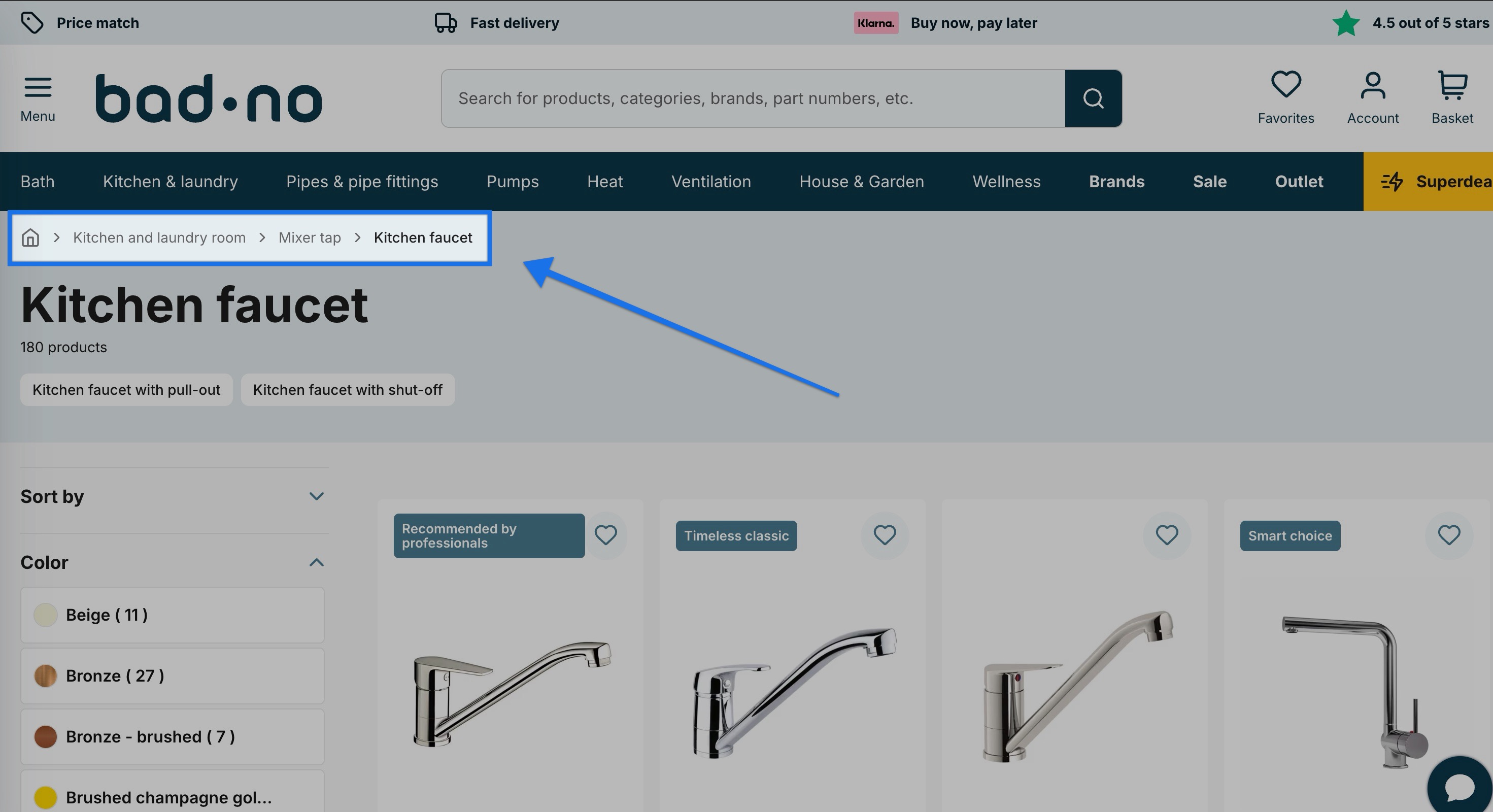 BreadcrumbList schema communicates your site’s hierarchy to AI systems. It helps AI understand how pages relate to each other, which is particularly important for stores with large catalogs and nested collection structures.
👉See how Risify handles breadcrumbs in your Shopify store: Risify Breadcrumbs
Risify covers all of these schema types with built-in validation. Errors surface automatically, and implementation doesn’t require manual coding or developer involvement.
The key shift here is that these schema types matter for AI understanding, not just for qualifying for rich results in traditional search. A page can have perfectly valid schema and never trigger a rich snippet, but that same markup still helps AI systems parse the content more accurately.
One more thing: consistency across your site matters more than coverage on individual pages. If your Organization schema declares one name on your homepage and a slightly different one on a product page, AI systems see two different entities instead of one. Inconsistent markup doesn’t get averaged, it gets ignored.
The Bigger Picture, Structured Data and the Agentic Web
Everything above is about today’s AI search. But the trajectory points somewhere bigger.
In May 2025, Microsoft announced NLWeb, an open project that turns any website into an AI-queryable endpoint. Instead of AI crawling your site and extracting what it can, NLWeb lets AI agents query your content directly and receive structured responses. The project is open source, and every instance doubles as a Model Context Protocol (MCP) server, making it discoverable to AI agents across the ecosystem.
It was created by R.V. Guha, the same person who created Schema.org, RSS, and RDF. This isn’t a side project. It’s the next step in a 25-year arc of making web content machine-readable, built by the person who started it.
NLWeb runs entirely on Schema.org data, it starts by crawling your schema markup. That’s its primary input. This shifts the relationship from “AI reads your site” to “AI queries your site.” If your structured data is flawed, the knowledge base it builds is flawed.
Microsoft calls this the “agentic web”, where AI agents don’t just search but take actions, compare options, and complete tasks autonomously. For that to work, websites need to expose content in formats agents can understand. Schema.org is that format.
The standards are live, the projects are open source, and the infrastructure is being built right now.
What This Means for E-Commerce and Shopify Stores
For e-commerce specifically, the impact of structured data on AI visibility is already measurable.
ChatGPT Shopping processes approximately 50 million shopping-related queries daily. Unlike traditional search, where you optimize for keywords and backlinks, ChatGPT Shopping prioritizes structured product data, third-party reviews, and conversational content.
If your product feed includes standard schema, GTIN, brand, reviews, price, availability, ChatGPT can process it and present your listing. If it doesn’t, you’re invisible.
The Shopify-ChatGPT integration makes this even more direct. ChatGPT pulls structured product data, titles, descriptions, images, pricing, reviews, from Shopify stores to populate its responses. If that data is missing, messy, or inconsistent, your products may not appear at all. Over a million Shopify merchants are now connected to this ecosystem, and brands like Glossier, SKIMS, Spanx, and Vuori are already part of the instant checkout rollout.
The competitive dynamic here is different from traditional search. In Google, you compete for 10 blue links. In ChatGPT Shopping, the AI typically recommends 3 to 5 products. The selection criteria are data quality, reviews, and relevance, not keywords and backlinks. A store with thin product descriptions and incomplete schema is competing against stores that have given the AI everything it needs to make a confident recommendation.
The Dataslayer test referenced earlier makes the stakes concrete. Two listings for the same product, same brand, one with complete Product schema, one without. The complete listing appeared in 8 out of 10 queries. The basic one appeared twice. This isn’t a hypothetical scenario. It’s happening right now, at scale.
Meanwhile, BrightEdge’s data shows that AI citations are converging with organic rankings. The overlap between AI Overview citations and organic results grew from 32% to 54.5% over 16 months. SEO investment and AI visibility are compounding, the same structured data that helps you rank organically is increasingly what gets you cited in AI answers.
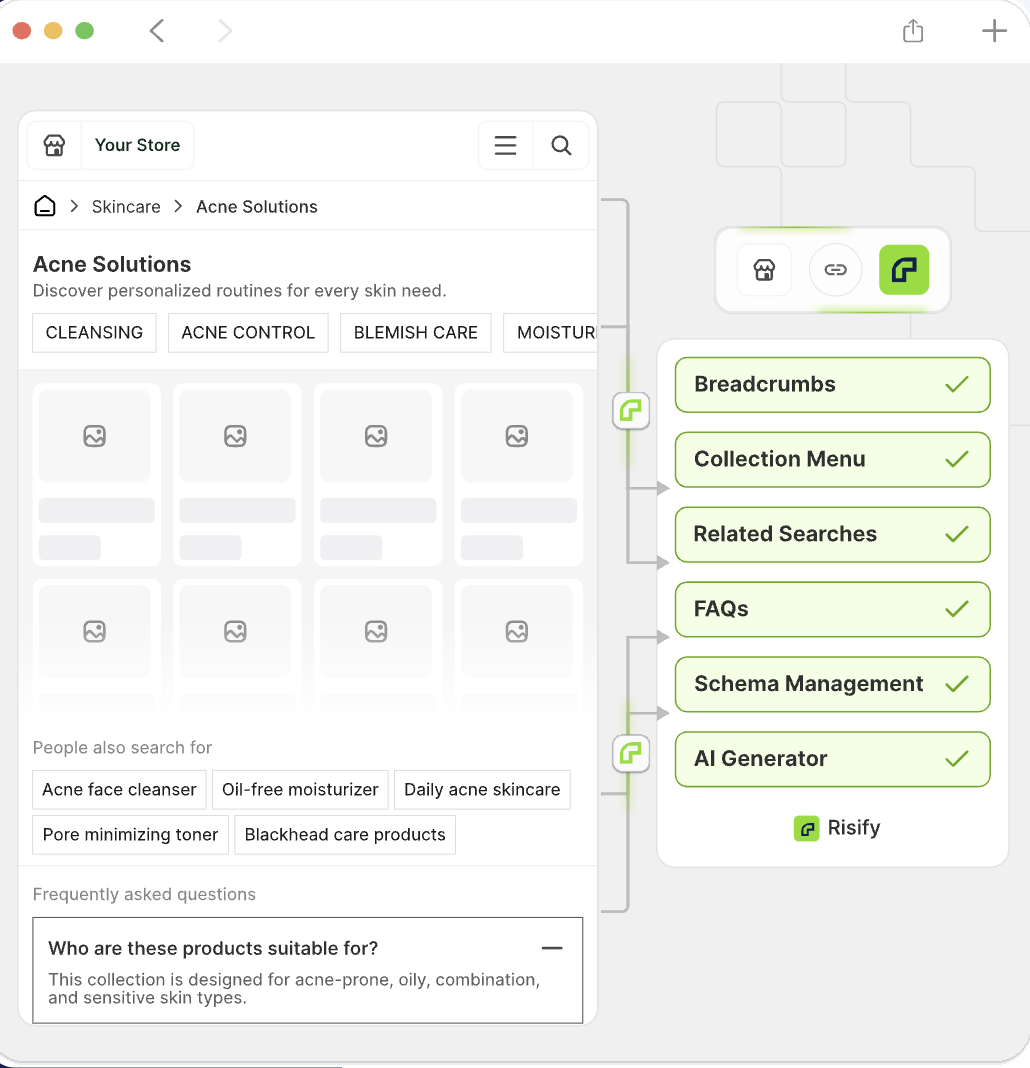
For Shopify stores, the practical requirement is clear: your product pages need complete, accurate, and consistent structured data. Your collections need proper hierarchy through breadcrumbs. Your common questions need to live in FAQPage schema, not just on a static page that AI systems have to parse manually. And all of it needs to stay current as your catalog changes.
👉 See how a Shopify store achieved 132% organic growth with Risify: Bad.no Case Study
Risify handles this end to end, breadcrumb navigation with full BreadcrumbList schema, a centralized FAQ system with proper FAQPage markup, AI-powered metadata generation, and store audits that surface schema errors and inconsistencies before they cost you visibility.
Getting Started, A Practical Checklist
If you’re starting from scratch or want to audit what you already have, here’s what to prioritize.
- Audit your current structured data. Run your key pages through Google’s Rich Results Test. Look for errors, missing properties, and incomplete implementations. Most Shopify themes add basic schema but miss critical fields like GTIN, ratings, and availability.
- Prioritize the right types. Product, FAQPage, Organization, BreadcrumbList, and Article, in that order. Start with your highest-traffic pages, not everything at once.
- Use JSON-LD format. It’s recommended by all major platforms, sits cleanly in your HTML head, and is the easiest format for AI systems to parse.
- Ensure server-side rendering. AI crawlers don’t execute JavaScript. If your schema is generated client-side, these systems never see it. It needs to be in the static HTML.
- Keep schema consistent with page content. If your markup says one price and your page shows another, it gets discounted. If your Organization name varies across pages, AI sees two entities instead of one.
- Monitor and update regularly. Schema that was accurate six months ago may be wrong today. Audit quarterly at minimum, and immediately after any catalog or business info changes.
👉 See how Risify audits your store’s SEO and schema health: Risify Store Audit
For Shopify stores that want to skip the manual implementation, Risify handles schema setup, validation, and ongoing audits natively within Shopify. No code, no external scripts, everything built on Shopify’s native architecture. Book a demo to see how it works for your store.
Conclusion
The trajectory is clear. Structured data has moved from a technical SEO detail to a foundational layer for AI-driven discovery.
The platforms that power AI search have said so publicly, the experiments support it, and the infrastructure being built for the agentic web runs entirely on it.
The question isn’t whether to invest in structured data. It’s whether to do it now, while the competitive advantage is still available, or later, when everyone else already has.