










Starting July 2026, Google Analytics will automatically receive purchase events directly from Shopify’s servers for any store with the Google & YouTube app installed.
It sounds like a clear win: more complete conversion data, less signal loss from ad blockers and browser restrictions.
And for raw purchase event capture, it probably is.
But that doesn’t automatically change the game in tracking more complete e-commerce data for better marketing decisions.
Let’s explore why.
Google’s Announcement About Native Server-Side Tracking for Shopify
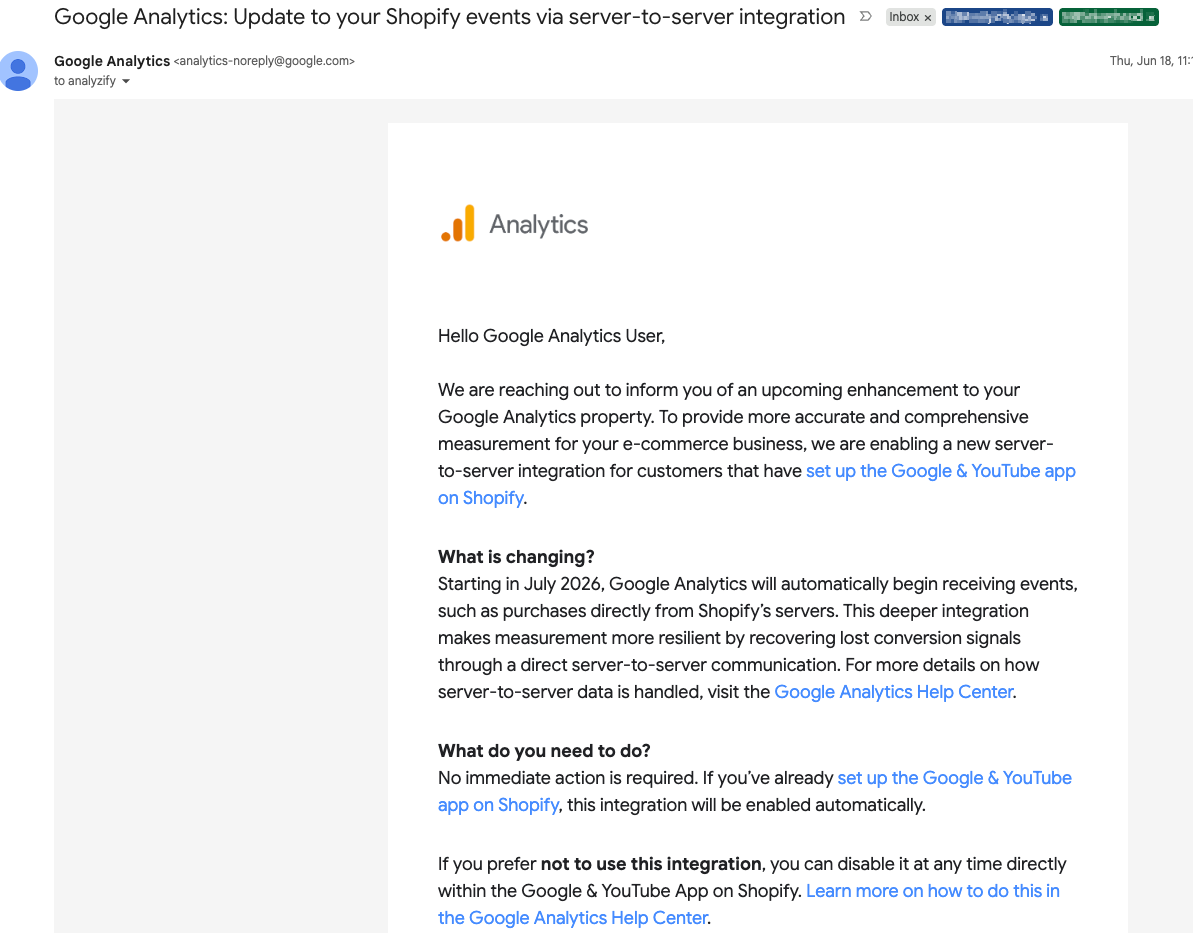
Google is rolling out a native server-side integration for Shopify. Here’s what it offers:
- Purchase events are sent directly from Shopify’s servers to Google Analytics and Google Ads.
- The integration activates automatically if you already have the Google & YouTube app connected.
- Google handles deduplication between browser-side and server-side events using transaction IDs.
Other events like view-item and add-to-cart, and checkout steps, are not included and still rely entirely on browser-based tracking.
What Google’s Native Server-Side Tracking for Shopify Means in Practice
Google’s update is set to improve purchase tracking quality for Shopify stores with a built-in solution that will require no technical knowledge.
In addition, you will secure automatic deduplication so you do not need to worry about the browser and the server sending the exact same purchase twice.
However, it’s important to understand the other data gaps that will still exist here.
Coverage
It’s worth noting that this update only covers Google’s ecosystem.
If you run ads on Meta or TikTok, your tracking for these platforms doesn’t benefit from this update at all. You will still need a broader server-side setup because:
- This update won’t improve your tracking across other channels
- You won’t get higher EMQ (event match quality) scores across Meta, TikTok, etc.
If you are running ads across those platforms without server-side tracking, this creates another specific problem:
GA4 will look more authoritative (because it has more complete purchase data), which makes marketers more likely to trust its attribution, which tends to favor Google Ads spend.
Impact on Shopify Attribution Data
There is a technical gap worth understanding here:
While the purchase event itself is now captured server-side automatically, upper-funnel events still rely on the browser.
If an ad blocker or Safari’s ITP breaks the user’s session before the server records the purchase, GA4 will log the revenue but may not be able to connect it to the correct campaign.
That recovered purchase still flows into GA4’s attribution model - which is data-driven attribution (DDA).
That will assign credit to the touchpoints it can see and measure best, which tend to be Google’s own channels.
Since Google controls both the data collection and the attribution model, its own channels always have the richest signals.
The DDA algorithm naturally gives more weight to touchpoints with stronger signal quality, and Google channels will always produce the strongest signals inside Google’s ecosystem.
GA4 even includes a “Paid Channels Last Click” model that gives 100% credit to the last Google Ads touchpoint if any Google Ads interaction exists in the conversion path.
While Google is transparent about this specific model’s bias, it reveals something important:
Google has built models that prioritize its own platform. The DDA model’s bias is simply harder to see because the algorithm is opaque.
👉🏻 Take a deeper look at how different attribution models work and their limitations.
Do You Still Need a Dedicated Tracking Solution After This Update?
Google’s native server-to-server integration will activate automatically starting from July.
It is a solid addition to your tracking stack . The integration will activate automatically. You don’t need to do anything.
But it covers a specific slice of the tracking picture.
Here is what it does and doesn’t do, and how you can fill the gaps in your Shopify data.
1- If you only rely on Google platforms:
Google’s new update on native server-side tracking for Shopify is a net positive for basic purchase tracking in GA4.
However, Meta, TikTok, and every other ad platform you run are not part of this update.
Their tracking still depends entirely on browser-side pixels, which means you’re still losing conversions on those channels to ad blockers, privacy browsers, and mobile restrictions.
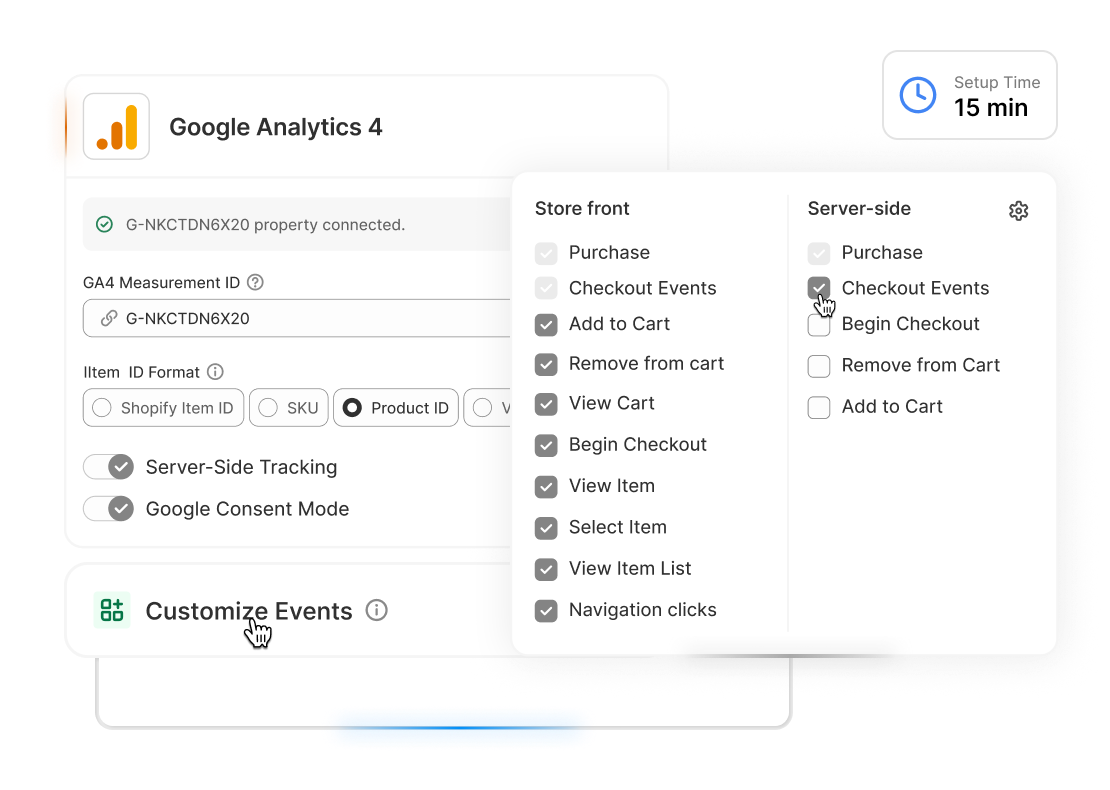
Analyzify provides server-side tracking for GA4, Meta, and TikTok from a single setup.
You get more granular order-level data in Google Analytics thanks to a server-side purchase tracking setup that is validated by our team before going live.
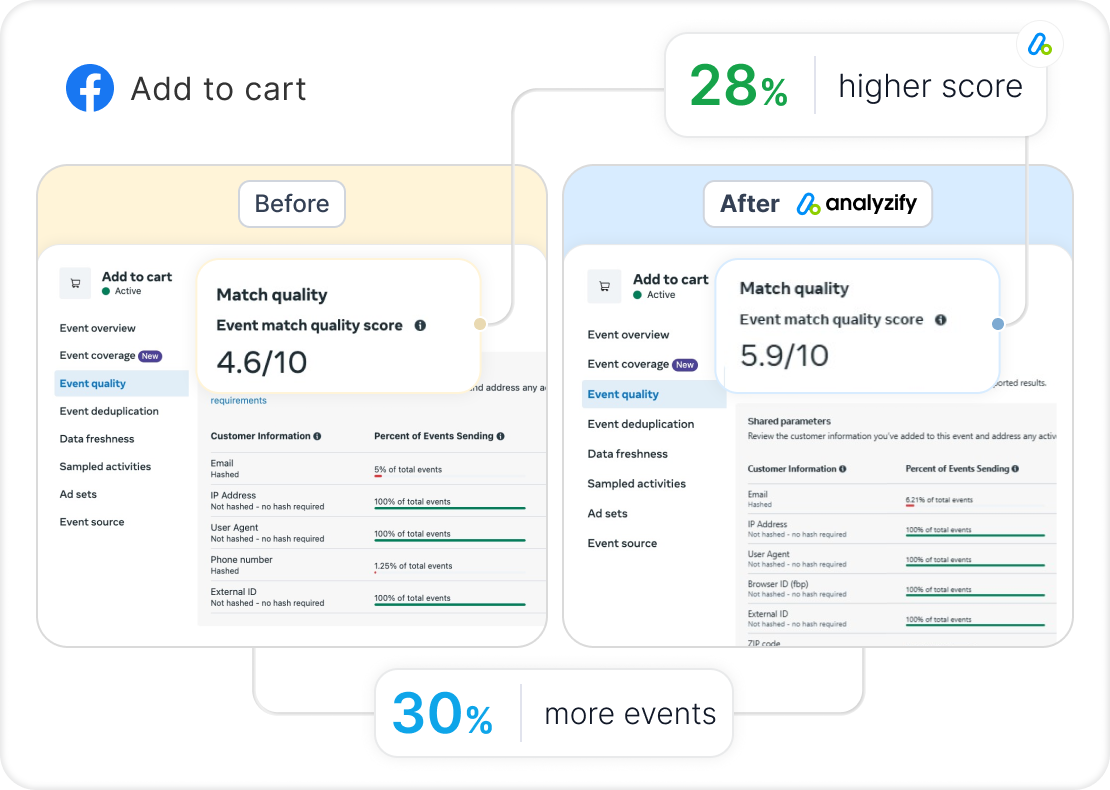
For Meta and TikTok, the server-side events include enriched customer identifiers that improve your Event Match Quality (EMQ) scores.
It means more of your conversions are matched to the right campaigns and your ad platforms optimize with better data.
👉🏻Learn more about Analyzify Server-Side Tracking
2- If you’re making marketing decisions based on only GA4 attribution:
You should note that more complete purchase data in GA4 won’t fix how that data is attributed on its own.
GA4’s data-driven attribution model still controls which channels get credit, and as outlined earlier, that model structurally favors Google’s own channels.
If you want to see the full customer journey without relying on a single platform’s attribution model, Analyzify’s Purchase Attribution Report helps you track every session from first visit to purchase.
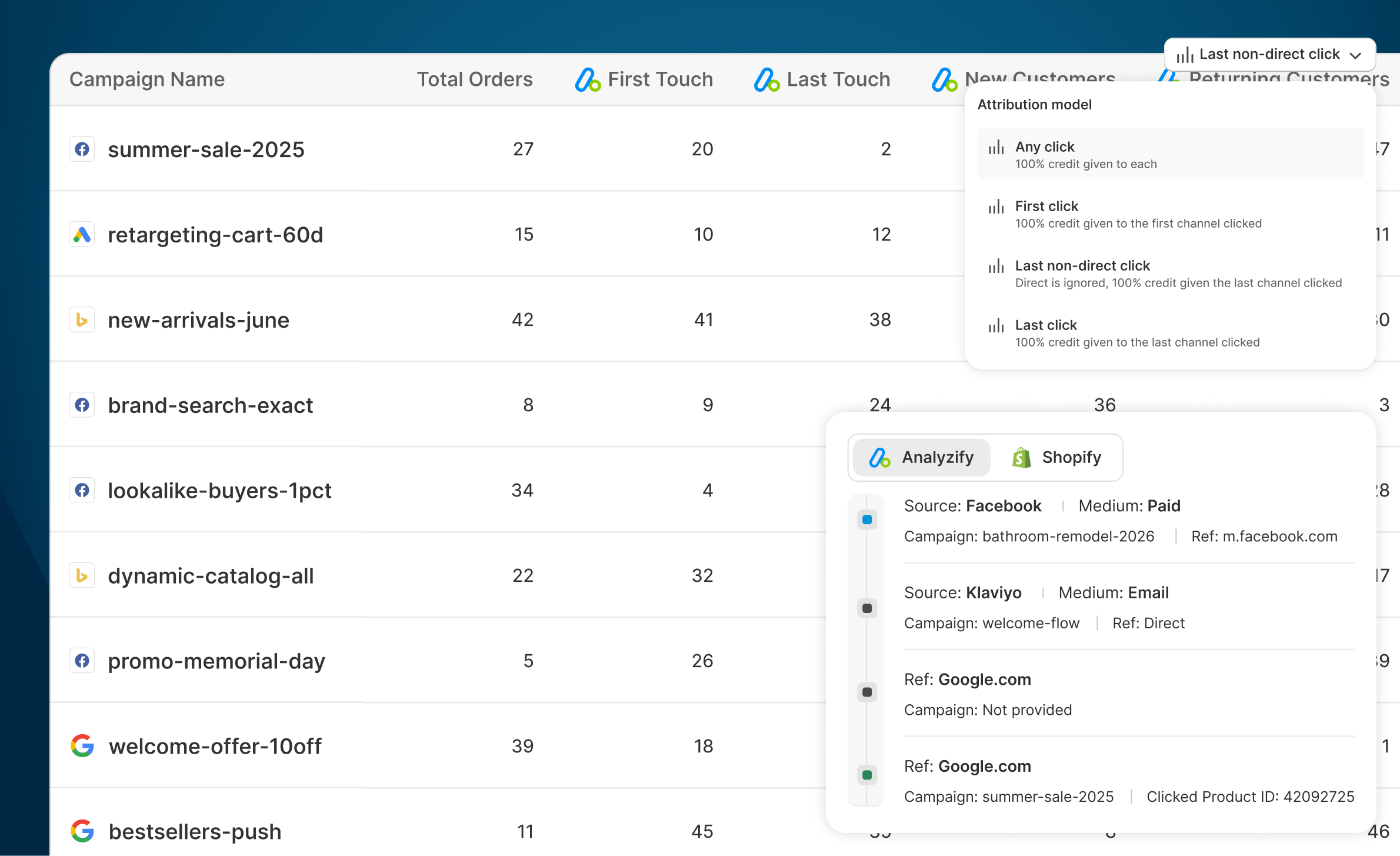
This way, you can compare four different attribution models side by side.
You can see first-touch, last non-direct touch, last click, and any-click attribution for every order, with cross-platform data from Google, Meta, email, and organic channels combined.
Conclusion
Google’s server-to-server integration is a positive step for better e-commerce data.
Recovering purchases lost to browser restrictions is a real improvement, and the fact that it activates automatically for Google & YouTube app users makes it accessible to every Shopify merchant.
But better data capture solves only part of the problem.
The update still covers only one event, one platform ecosystem, and one attribution model. If you advertise across Meta, TikTok, or other channels alongside Google, this update strengthens one side of your reporting while leaving the rest unchanged.